Tuesday, July 19, 2011

Unrecorded Arthur Rackham Drawing Found in Unrecorded Louis Wain Edition

by Stephen J. Gertz


Anytime an unrecorded book illustration by Arthur Rackham comes to light, it's news. 

Buried within Cats At Play, a book illustrated by, amongst others, cat artist, Louis Wain, is an unheralded black and white text illustration, on page forty, of four chickens in various states of distress as they observe, in high dudgeon and with no little annoyance, a cat within their food bucket chowing down the chicken feed. This is commonly known as kitty chutzpah. And at the lower left of the bucket, as small as can be, are Rackham's initials as typically drawn. 


Latimore and Haskell, and Riall make no mention of this illustration in their Rackham bibliographies, and it was unknown to the Arthur Rackham Society when we inquired.

This edition (the copy I handled with a school prize label dated December 22, 1904), is, in the absence of contradictory evidence, the true first and unrecorded, with no copies in institutional holdings worldwide. It is not noted in Rodney Dale’s Louis Wain: The Man Who Drew Cats, nor in Ellery Wood’s bibliography within Dale. As noted above, it was certainly unknown to  Latimore & Haskell, and Riall. 

Note Rackham's "AR" at base of bucket, left.

At the time of this book's approximate publication, Rackham had already had work published, mostly under his name with credit on the title page, providing single or multiple illustrations for, amongst others, To the Other Side (1893); Isis Very Much Unveiled (1894); The Dolly Dialogues (1894); The Zankiwank (1896); The Money Spinner (1896); Two Old Ladies... (1897); Captain Castle (1897); Through a Glass Lightly (1897); Charles O'Malley (1897); The Castle Inn (1898); Evelina (1898); The Ingoldsby Legends (1898); Gulliver's Travels (1900); Faithful Friends (1901); More Tales From the Stumps (1902); The Grey House on the Hill (1903); The Greek Heroes (1903); Red Pottage (1904); and The Peradventures of Private Pagett (1904). 

That Rackham would accept a commission to provide a single text line drawing to this book with no more credit than his microscopic initials should not come as a surprise. Rackham was hustling for work wherever he could find it; good reviews and regular exposure were not enough to keep him fully employed with money in his pocket. And none of the other illustrators for the book received credit beyond their initials or full signatures to their contributions.

And so we have a previously unknown Rackham during his transitional period, when his fairies and goblins were emerging but had not yet fully vanquished the simple, pay-the-bills work of his early years.

This book was later issued by Blackie & Son, 1917, and Alexandria Publications, c. 1920, in what appear to be abridged editions; the Blackie & Son edition collates to only twelve pages. It is unknown to me whether these later editions contain the Rackham drawing.
__________


WAIN, Louis. RACKHAM, Arthur. SMITH, H. Officer. GLADWIN, May, et al. Cats At Play. London: John F. Shaw, n.d. [c. 1900-1904].

First edition, unrecorded and scarce,. Small quarto (9 5/8 x 7 1/8 in;  245 x 180 mm). Illustrated throughout in black and white and color, with fifteen drawings by Louis Wain, and an unrecorded text drawing by Arthur Rackham (so initialed) on page 40.

Publisher's pictorial boards. Beveled edges. School prize label to front paste down endpaper dated Dec. 22, 1904. 160 pp with  advertising as endpapers.

Cf. Wood 34 and 35, as recorded in Dale, Louis Wain: The Man Who Drew Cats, p. 137.
__________

Of related interest:

Two Very Rare Books For Cat Lover's Only (A Naughty Story).

The Riddle of Arthur Rackham's "Faithful Friends" Solved?
__________

Images courtesy of David Brass Rare Books, with our thanks. The book sold instantly.
__________
__________

Monday, July 18, 2011

I Wrote For the Mafia

by Stephen J. Gertz

In late 1988, desperate for something green other than mold in my bank account, I contacted an editor at Pacific News, a periodicals distributor located in Los Angeles’ San Fernando Valley, at the suggestion of a friend.

Pacific News had nothing to do with news. It was, rather, one of the major publishers and distributors of pornography in print, arguably the largest on the West Coast, one of the many wholesalers that, until his conviction in 1989 for income tax evasion (he refused to pay any. None. At all), had been a part of the infamous Reuben Sturman’s shady international porn empire. How shady was it? Sturman was  protected by the Gambino family of New York, soliciting their security services (read: partnership) after Jimmy "The Weasel" Fratianno of Los Angeles shook him down and beat him up. After Reuben’s incarceration, escape, and recapture - on the lam from everybody, he was nabbed with his girlfriend in a cheap motel room across the street from Disneyland in Southern California, his version of Fantasyland up for grabs - his organized-crime partners split up the syndicate he had created. Paul Wisner, who had been Sturman’s straw-man when he bought Pacific News in 1974, was still nominally in charge while the true owners remained in the background.

Reuben Sturman, behind bars.
This is one of the very few photographs of the man,
who, prior to his imprisonment, hated having his picture
taken and often wore Groucho glasses with rubber nose,
bushy eyebrows and moustache to vex photogs.

When I decide to write a porn novel I don’t mess around. I want a publisher with muscle in the marketplace.

I met the editor, Dennis Rodriguez, who had been working in the porn trade on and off since the 1960s. Without   benefit  of   writing   sample  he gave  me an  assignment and  informed me  of  the   basics.     "35,000 words; 150 pages, twenty-five lines to a page; a sex scene every three pages. All rights ceded outright." The fee? $500.

In 1968 pulp porn writers were earning upwards of $1200 per manuscript. That $500 in 1988 was worth $120 in 1968. With the visual supplanting the verbal the writers market for porn had drastically shrunk.

Speaking of the visual, Pacific's offices had my retinas working in overdrive. Three or four average-looking, to all appearances prim, secretaries sat at desks strewn with humongous upright dildoes. The women were blasé. One had a lampshade precariously balanced atop a particularly anatomically correct and ambitious latex proxy. Another used a Doc Johnson special as a paperweight. Just another day at the orifice.

O[y] Canada

Dennis made it clear that because the book would be distributed in Canada I'd have to follow a few special guidelines. He handed me a copy of a Canadian Customs Notice dated February 11, 1988.
Subject: Administration of Code 9956.

This is to provide further clarification of Customs guidelines with regard to the interpretation of the terms 'degradation' and 'dehumanization,' as they are applied in the administration of Code 9956 of Schedule VII to the Customs Tariff. The following examples from court jurisprudence are provided to assist Customs officials and the public in their understanding of how these terms may be defined in the context of applying the provisions of Code 9956:

1) Goods which depict or describe degrading or dehumanizing acts tend predominantly to deindividualize and impersonalize sexual acts by inciting the reader or viewer to look upon the     individuals involved as objects or means to be used for one's   personal gratification. In particular, the individuals are deprived of unique human characteristics in that they are portrayed as sexual objects whose only redeeming features are their genitals. For example, this type of degradation can be seen in potrayals of individuals as prizes or trophies for competitions where the winner uses the person as he/she chooses.

2) Goods which depict or describe an aggressive, powerful person who derives pleasure from inflicting pain upon a     weaker individual, degrading the victim by conveying the message that he/'she enjoys abusive anti-social behavior. An example of the manifestation of power used to degrade an individual is evident in pictorials, stories, films, etc., which show individuals who are in positions of power and/or authority who use abuse, force, coercion and threats to get their victims to perform sexual favors.

3) Another common theme which is used in sexually explicit material to degrade and dehumanize individuals is to depict them as having animal characteristics. The imagery of bars,     cages, collars, leashes, etc., is often used to reduce the individual to the status of an animal. In these instances, there is often an element of restraint (i. e., the person is being caged against his/her will) and the implication is that the individual is behaving like an animal.
   
4) Court jurisprudence has established that materials which depict or describe pregnant and/or lactating women in a sexually explicit context debases motherhood and are degrading to all women.
   
5) Further examples of acts which are considered to be degrading and dehumanizing are as follows: Group ejaculation on one person, excessive ejaculation on a person's face, double-penetration of an orifice and the insertion of objects that would or could cause pain, including the fist or foot, and submissive acts such as the licking of another person's boot in a sexual context. Depictions and descriptions such as these have been found by the courts to be obscene in that they exceed the standards of what contemporary Canadian society will tolerate.
Kinda gets the creative juices flowing (but, please, not on a person's face), yes?

Rodriguez further provided me with a company checklist: No force at all; No bondage and discipline; No dominance; No submission; No anal; No fetish; No incest.

I wrote the book in four days. It was difficult. I kept recalling the Canadian Customs Notice: "No lactating women, no pregnant women." It would never have occurred to me to include swollen damsels in my porn novel but Canadian Customs had infected my mind with images of debasing and dehumanizing sexual acts. Now they were all I could think about.

I wrote by the rules: Häagen Dazs™ vanilla bean  in a   hard-core cone. The novel's a snore, strictly scheiss und dreck. It was published by Lusty Library, distributed by Parliament News, and copyrighted by American Art Enterprises.

At the very top of the Customs Notice, a fax, ran the following: "9/28/88 [telephone number] TransMediaGrpUSA   Parliament News."

The Roots of Modern Porn

Pacific News was originally part of '60s porn-magnate Milton Luros' L.A.-based empire, which began in the late 1950s with American Art Agency (later Enterprises), a publisher of girlie magazines. Luros, who began his career as a respected illustrator for  science-fiction pulps during the  1940s - early 1950s,  soon moved into  publishing  nudist magazines, essentially full-frontal porn with legal blessing.  He was the master of the stretch, the cautious, incremental pushing of boundaries. With the U.S. Supreme Court obscenity rulings of the mid- through late-1960s, however, the walls came tumblin' down and hard-core came to town.

Science Fiction Quarterly, May 1951.
Cover by Milton Luros.
From cheesecake in space to
lord of porn: an artist's odyssey.

Early on, Luros established Parliament News (Paul Wisner was a staff-salesman, eventually running it for Luros), to distribute his wares and, over the years, had bought other, smaller, distributorships, including Pacific News, to consolidate his position as the largest, most respected publisher of pornography in the U.S. By 1974,  however, legal pressures had forced his retirement and he sold out to Sturman, who had been anxious to  add the Luros assets to his Cleveland (later L.A.)-based syndicate and extend his control of the East Coast trade to the entire nation. By 1988, Pacific News, under Sturman's arm's length leadership and brilliant (if typically unethical) business smarts (creating a massive, dizzying maze of interlocking corporations), had become  part of a global syndicate that vertically integrated porn across all media, including sex toys, manufacture to retail, and was corporately safe as milk. But still completely shady; the olive oil remained dark green and there was nothing virgin about it. Business methods often involved a little help from his friends, of the physically emphatic sort. The whole operation was creepy. Dave Gardner, who worked as an art director at American Art Enterprises during the 1980s, recalls:

"I worked under Jerry Pecoraro [who may have been the longest surviving staff member of American Art Enterprises, joining in the mid-Sixties] who was doing mostly old-style cheesecake stuff. I worked the softcore side, doing magazine layout and typesetting. They also published some crappy fiction (not porno but cheesey science-fiction, westerns, mysteries, action, etc.), to somewhat legitimize the operation…The 'other side' of the building was off-limits. It housed Paul Wisner's office, other administrative offices, and London Press…One of the other artists had a friend working in London Press, so I got to go over there just once to see the hardcore work they did, but otherwise it was an unwritten law to stay away from there, a separation of smuts, so to speak.

"I saw Paul only occasionally, as his office was on the 'other' forbidden side. Once in a while I'd see this small Italian guy come in and walk around like he owned the place. I asked one of the guys about him, who told me to cool it, that this guy was a serious Mafioso who came up to collect bags of cash, and not to ask any more questions about him."

Under Luros' ownership, American Art Enterprises and all of the Luros constituent division offices were typical businesses; just open the door and walk in. Not so now. Dave Gardner continues:

"At American Art, you had to get buzzed in after being scrutinized by the receptionist. One time, word went through the building that we were going to be raided by LAPD vice. I sure as hell didn't want to to jail, but the boss wouldn't let us go home. So all day, I sat there shaking and wondering when the cops were going to bust through the door and lead me off in handcuffs. It never happened, though. The overall feeling at American Art was crass; I learned how to be ashamed of my work. It had the air of true smuttiness about it. I got the feeling we were just a mob front at American Arts. It was not a very pleasant experience."

When Reuben Sturman entered the trade it was a business. When he exited it was an industry.

What has any of the above have to do with rare books?

Having ultimately written a handful of dirty books for Pacific News/American Art Enterprises, my contributions to the decline of Western civilization have become exceedingly scarce, if not extinct. Print runs for pulp porn had, by 1988, declined to 1500-3000 copies from a late 1960s high of 20,000-50,000, so there were not that many in circulation to begin with. Factor in that, once read, copies were tossed into the garbage, and unsold books pulped. Further consider that few cared to collect paperback DBs, a phenomenon that would not fully emerge until the 1990s, and they were most certainly not collecting mine; only pre-1973  dirty books, the genre charmingly known in the paperback collecting world as “vintage sleaze,” are highly desired. Hell, even I didn’t collect mine; I only have one copy of the four DBs I wrote.

BERMAN, Jay (house pseud., here of SJG). Tales of Lust.
North Hollywood, California: American Art Enterprises, April 1989.
Lusty Library LL-626. 16mo.154 pp. Photo-illustrated wrappers.

Introducing, in its first appearance in twenty-two years, the first published book by “Jay Berman." I submitted it under the pseudonym, “Jacques Toutight.”  My alternative was “Boris Whocutchyakokov,” presciently foreshadowing the John and Lorena Bobbitt story five years hence. (Though sorely tempted I resisted using "Jack Goff," a blue-ribbon porn pseudonym claimed, alas, by another during the '60s).

The plot line is simple: A pedantic, professorial blowhard with a soft spot for  sesquipedalian  exposition regales the patrons of the seedy dive he’s parked in with tall, highly apocryphal tales of his sexual exploits. Yes, it’s autobiographical. The blurb on the rear wrapper succinctly sums things up: “Hot pleasure was what he demanded of life and he was not afraid to walk on the wild side in search of it!”

Absolutely true. I demand  a nice, pleasurable  steam-bath every now and then and once dared to patronize a small, run-down, all-Jewish spa in the Pico-Robertson/Little Tel Aviv district of L.A. where you never know what's going to happen. You don't know from wild until you've witnessed smoked salmon swim Pico Boulevard upstream - during rush-hour traffic, yet  -  as I have.

I would have used the more appropriate Yiddish-Americanism, shvitz-bath, above but feared, given the context of the post, that some might  think it slang for a sexual act forbidden by Canadian Customs.
__________

Factual information and interview with Dave Gardner referenced from An Amazing Kingdom of Thrills: American Paperback Erotica 1965-1973, the author's unpublished manuscript ©2001 (each rejection letter to my agent gushing before passing on it; Eric Schlosser's Reefer Madness: Sex, Drugs, and Cheap Labor in the American Black Market, which, in part, also dealt with the porn trade, was making the rounds at the same time and got all the attention, i.e. offers).

Readers who would like to learn more about the fascinating Milton Luros - an honorable man in a dishonorable business - should read Everybody Loves Milton: Rabbi Porn, the definitive story, extracted from An Amazing Kingdom... and published in 2004 on veteran porn-trade editor Earl Kemp's website.

Portions of An Amazing Kingdom... were adapted for Sin-A-Rama: Sleaze Sex Paperbacks of the Sixties.
__________
__________

Monday, July 11, 2011

Gone Fishing

by Stephen J. Gertz

The author on vacation, 2010.

I'll be off on a brief vacation this week, just like last year, wearin' breeches, waistcoat, full-brimmed hat, and takin' my rod n' reel, and a good book to the ol' fishin' hole.

I'll read the book then use it as bait to lure the four-eyed set with fins lookin' for somethin' to peruse.


See you next week.
__________

Header image by Arthur Rackham for The Complete Angler by Izaak Walton, London: George G. Harrap, 1931. Courtesy of David Brass Rare Books.

Reading Fish image courtesy of CafePress.
__________
__________

Thursday, July 7, 2011

The Wild-Ride Journal of a Hollywood Bookseller, Series 2, Episode 5

by Arnold M. Herr

Fast forward:

I got back to my store just in time to get a phone call from Lou, a guy who had sold me books in the past, mostly military stuff.  But his collection was pretty much tapped out.  Most of what he had to offer was dregs; nothing special, just shelf stock.  My sister said she’d mind the shop, so I walked about half a mile to meet Lou for a cup of coffee at the Farmer’s Market at 3rd and Fairfax.  He rarely came in the store anymore.  Whenever he was in the neighborhood, he would call and let me know he was doing some shopping at the Farmer’s Market and we would have a cup of joe at the food court.

I grabbed a coffee and a glazed doughnut at Bob’s and joined Lou at the table he had nearby.  Lou had the habit of speaking over his right shoulder and out the right side of his mouth.  I knew when he was about to say something because he would turn away slightly from me before talking.

Me:  You can face me Lou, I’m standing right in front of you.

Lou:  I drove a cab in New York for fifty-three years and most of the people I talked to were sitting in the back seat.  What can I say?  I’m a creature of habit.

Lou is also nearly blind, but he still drives in spite of his daughter’s efforts to hide his keys.  We talked about this and that…mostly that and very little of this.  He complained about the high cost of books and that he could no longer afford to buy as lavishly as he liked.

Me:  Well, you’re living on a fixed income aren’t you?

Lou:  There’s nothing fixed about it.  It’s in dire need of repair.

After maybe 20 minutes I got up to leave, telling Lou I had to walk back to the store and relieve my sister so she could have lunch.  Lou insisted on driving me.  I gave in too easily.  I got into his car.  In the back seat.  Lou slid behind the wheel.  In deference to me, he said he would drive slowly and carefully.  It was only about 10 blocks to my bookstore.  Did I mention Lou was ninety-two years old?  He wanted to reach ninety-three.  I think. 

He fired up the engine and revved it a few times.  “This is a ‘65 Checker.  Two and half tons of indestructible, honest-to-God Detroit iron.”  He dropped the gearshift into Drive and kicked the gas pedal to the floor.  The rear tires spun and smoked as they grabbed the asphalt.  He got right behind an exiting pickup truck whose driver had just paid the attendant who lifted the long plastic barrier over the exit lane.  Lou yanked the wheel to the right and we raced up Fairfax Ave. three inches from the pickup’s tailgate.  The carburetor sucked in 91 octane gas and sounded like a flushing toilet as Lou abruptly changed lanes.  I was sure he had clipped the front bumper of the Metro bus we cut off, but we were a block away before I had the presence of mind to say anything.

Lou:  I don’t pay to park anymore.  I’m ninety-two.  I paid enough.  Been driving for more than 75 years if you can believe it. 

I wasn’t sure what I believe anymore.

Lou:  Your store’s around here somewhere, ain’t it?

Me:  We just flew past it.  Slow to sixty and I can get out anywhere around here. 

Lou:  Did you notice this baby can really accelerate?  Raw power.  Cast-iron block.  Dual exhausts. 

I was gonna say something; my mouth was open and poised for speech when Lou slammed on the binders.  I flew over the top of the front seat and my face hit the windshield.  It tasted of nicotine.  Lou still smoked a pack and a half a day.  I jumped out as the car skidded to a stop.  Lou floored it before my door was closed and went fishtailing up Fairfax, through a red light at Melrose and weaving around traffic until he was out of sight.  He was dead within a week.  I’m not sure if it was the cigarettes or his driving that caused it.
__________
__________

Wednesday, July 6, 2011

Evidence of Witches and Apparitions Discovered (330 Years Ago)

by Stephen J. Gertz


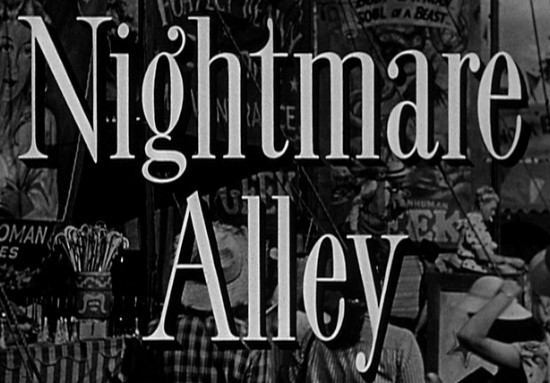
Welcome to Rare Book Nightmare Alley, the series that brings antiquarian bad dreams in print to light.

This week, we tear the curtain that separates the living, naked or otherwise, and the dead, the bitch from the witch, and the doofus from the demon.


Attention Ghost Whisperers, Ghost Busters, and Witch Patrol: evidence that your job is not simply glorified make-work, ungainful employment  for the highly credulous, and the answer to "Who Y'Gonna Call?" when reason fails and whoa-nelly! prevails, has now surfaced.

Actually, it surfaced 330 years ago. But who, aside from those on the Other Side, is counting? The devil, witches, warlocks, and miscellaneous demonic desperados are  kvetching for their share of our waking nightmares and official recognition for their malignant presence in our otherwise benign and placid lives.


What these twisted spirits need is a Rev. Jesse Jackson to raise their self-esteem: "I AM somebody!" They want proof of their reality firmly rooted in our mental flowerbed; if only one person doubts their existence the bloom is off the black rose. Supernatural beings are only as strong as the total number of  those who believe in them; doubt is the silver bullet, the clove of garlic, the wooden stake that casts them out of our dimension, and, no insult intended to the blind, out of sight, out of mind. For the devil that just won't do.


Jesse Jackson is, alas otherwise busy. So, look no further than Joseph Glanvil, who, in his Saducimus Triumphatus (1681), provides  hard evidence for easy belief in the supernatural beings we've all come to appreciate as the beloved villains of our dark imagination, the wacked-out members of the family that periodically emerge from the worm hole in our brain to hex and vex us.


The hard evidence - anecdotal, assessed with the  critical reasoning skills usually associated with developmentally disabled mollusks  -  is hardly worth considering. But, then, there'd be no joy in Mudville, mighty Casey striking out the bats in the belfry. This is natural philosophy's last gasp before Newton and the rationalists dominated the sciences. But not before Saducismus Triumphatus's  influence upon Cotton Mather led, eleven years after its publication, to the Salem witch trials of 1692-93.


In that respect, the book is seriously frightening, truly a rare book nightmare, its text an extended footnote to a dark chapter in early American history, and a chillingly scarce volume in first edition. 

Not much point in dwelling upon the text; the book's engravings do the talking. If, however, you actually hear them talk call Dr. Katz, Professional Therapist,


or Mademoiselle Zeena, carnival spiritualist.


Hard, reliable evidence for the existence of witches and the efficacy of witchcraft was actually discovered 276 years after Glanvil's Saducimus Thriumphatus, in 1957, by Cy Coleman and Carolyn Leigh, publicly presented, with an assist from Nelson Riddle, for the first time by the Chairman of the Board, who, unsurprisingly, has the last word on the subject:


__________


GLANVIL, Joseph. Saducimus Triumphatus: or,  Full Plain Evidence Concerning Witches and Apparitions. In Two Parts: The First Treating of their Possibility. The Second their Real Existence. With a Letter of Dr. Henry More on the same Subject. And an Authentick, but wonderful story of certain Swedish Witches. Done into English by Dr. Horneck, Preacher at the Savoy. London: Printed for J. Collins...and S. Lownds, 1681.

First edition. Octavo. [5], 58; [8], 180, [9] , 310, [5], 311-328 [i.e. 348], [1] pp. Frontispiece. Woodcut illustrations.

ESTC R25463. Allibone, p. 676.

This is an extremely rare book in its first edition, with OCLC/KVK recording only two copies in library holdings worldwide, and ABPC reporting no copies at auction within the last thirty-six years.

6:54 AM CORRECTION: Well, this is embarrassing: an initial misspelling while searching auction and library records led me astray. The first edition is actually well represented in library holdings and there have been more than few copies at auction, though the majority of those were not in the best of condition. Please forgive the error.
__________
__________

Tuesday, July 5, 2011

When Childrens Dolls Went Off To War (1916)

by Stephen J. Gertz

Dust jacket.

In 1916, the grim, charnel year of World War I in which  over 1,300,000  young men fell dead or wounded during the battles of  the Somme and Verdun, a slim, unassuming book for children was published. Josephine and her Dolls, the first book in what would become a series by Mrs. H.C. Cradock, each illustrated by Honor C. Appleton (1879-1951), is, to the best of my research, the first  book for children to directly address war  from a child's perspective.

Children up to seven years old are, according to the great developmental psychologist, Jean Piaget, in a preoperational stage of development in which, for example, the child may behave toward  dolls as if they were real persons; the line between fantasy and reality has yet to be firmly drawn. A child at this age uses dolls to make sense of the world around them, assimilating new, often puzzling, information and stimuli and accommodating to it through the staged behavioral interaction of the dolls.

Stress and anxiety are worked through and lessons learned in the child’s fantasy scenarios. New words, phrases, the surrounding emotional landscape, the behavior of adults -  a sensory, cognitive, and affective flood - all are integrated into doll play through which chaos becomes, however fantastical, ordered, and a degree of comprehension achieved. Childrens' doll-play, however imperfect and unformed the mirror, reflects the adult world.

The doll-play tableaus created may not make any sense to adults but they do so to the child in perfect child-logic. Doll-play is living theater of the pre-pubescent absurd, the dolls Pirandello-like characters in search of a juvenile dramatist to bring them to life to act out and give meaning to the world of that child within the incomprehensible world of adults.

To write a book for children using a doll-play scenario as the narrative device is, then, an inspired choice; the book is not written down to children by an invisible, anonymous and omniscient  adult  but, rather, by a child, with face and name, to share with peers, employing a familiar mode of play. Which, ultimately, makes the reading of the book a playtime activity, a very positive association.

Chapter one opens with little Josephine introducing us to her family of dolls, a sixteen-member cavalcade of personalities. And then, without further preamble, Josephine takes us to the subject of her child drama.


Josephine's doll-drama follows the typical arc of war, beginning with its patriotic call to arms and the enthusiasm of young males to heed it, test their mettle, and, hopefully, become men.


...Followed by a family's fears for loved ones' safety.

Battle is then joined and harsh reality addressed. Doll Dorothy is wounded and brought in on a stretcher. "We [Josephine and the dolls] decided that she should be a wounded Belgian, and that Dora and Rachel should be Red Cross nurses, and the boys soldiers." Doll William is chosen to be the German emperor (Kaiser Wilhelm) because of his name. "I painted a fierce moustache on his face," Josephine says. William is not a happy doll.

"The battle was very fierce, and raged greatly, and many were wounded and killed. Then the Red Cross nurses walked bravely on the field of battle, and waved a white flag, and everybody stopped fighting; and they said to the Emperor: 'Please, Sire, may we take the wounded away and nurse them?' And he said: 'Yes, you may,' And they did."

After the battle William begged not to be the Emperor anymore and Josephine allowed him to be the doctor as long as he promised to become the Emperor again, if necessary. The doctor was busy: 

"Little Teddy was the first wounded man to be brought in. His leg was off. But he was very brave and never cried once. Then Patrick came in. He could barely just walk..." Quacky-Jack enters on a stretcher. The Doctor gives them each a piece of chocolate to make them feel better.

But enough is enough.


No it isn't.

"'All right,' said the German Emperor.

"So they shook hands, and were friends again, and all the people clapped."

And there it is, World War I reduced to child bite-sized understanding, a family feud gone horribly wrong, first cousins King George and Kaiser Wilhelm (grandchildren of Queen Victoria, as was Czarina Alexandra of Russia), and King George and Czar Nicholas first cousins through their mothers, in a monumental spat with catastrophic consequences, the family tree falling atop Europe and the Middle East, the warning, Timber!, unheeded with grotesque result.


"'Now children,' I said, looking gravely at them all, 'let this war be a lesson to you all. No more quarreling...I then put them all to bed, and there they are now."

I don't think I've been able to capture the power that Cradock as Josephine brings to bear in this simple narrative. Whether Mrs. Henry Cowper Cradock (1863-1941), née Augusta Whiteford, a teacher, intended to or not, she wrote a great, if unheralded, anti-war novel for kids, best read, perhaps, by adults. And provided further evidence that if you want an issue broken down to its simple, clearest essence, pruned of its foliage and without adult sophistry, ask a child.

Josephine and Her Dolls is, in its quiet way, the juvenile precursor to All Quiet on the Western Front (1929), an anti-war story written, rather courageously, I think, in the midst of the Great War, not afterward, and from a child's point of view. It is the  anti-Childrens Crusade, and a gently pointed admonition that this has all gone way too far, that the adult doll-masters have, in their own fantasies, utterly failed; real people do not bleed excelsior.

The book is also quite rare, with no copies coming to auction within the last thirty-six years and OCLC recording only ten copies in library holdings worldwide.
__________


[APPLETON, Honor C., illustrator]. CRADOCK, Mrs. H.C. Josephine and Her Dolls. Related by Mrs. H.C. Cradock. Pictured by Honor C. Appleton. London-Glasgow-Bombay: Blackie and Son Limited, n.d. [1916]. Tall octavo. 47, [1] pp. Eight full color plates, incl. frontispiece, eight back and white drawings. Publisher's original quarter cloth over pictorial paper boards. Dust jacket.

As youngsters routinely shred them within 72 hours, dust jackets to this volume, as with many  old and/or rare childrens books, are scarce.
__________

Images courtesy of David Brass Rare Books, currently offering this volume, with our thanks.
__________

Disclosure: In an earlier incarnation, I studied and practiced Occupational Therapy in pediatric and geriatric settings, performing my psych. internship at UCLA Neuropsychiatric Institute. O.T., the first allied medical profession to adopt holistic, mind-body treatment (in the late 19th century), uses  goal-specific everyday activities meaningful to the patient, including dolls, as an essential therapeutic modality. It is why, I suppose, that I find this little book so extraordinary.
__________
__________

Friday, July 1, 2011

Posters on Parade at Bloomsbury, 2

by Stephen J. Gertz

CAPPIELLO, Leonetto. Contratto.
Color lithograph, 1922.
Printed by Les Nouvelles Affiches Cappiello.

Last week's vintage poster sale at Bloomsbury Auctions - London brought some beautiful, striking, and unusual work into the spotlight.

CAPPIELLO, Leonetto. L'Oie d'Or.
Color lithograph, n.d.
Printed by Devambex.

We begin with examples by Leonetto Cappiello (1875-1942), the great Italian designer living in Paris whose innovative poster designs led to his being considered a father of modern advertising.

CAPPIELLO, Leonetto. Axa.
Color lithograph, 1931.
Printed by Devambex.
 
In contrast to earlier, painterly styles, Cappiello developed a startling approach with bold figures popping off  dark, often black backgrounds in stark contrast.

CAPPIELLO, Leonetto. Le Nil.
Color lithopgraph, n.d.
Printed by Vercasson.

Cappiello arrests attention, captures imagination, and holds the eyes hostage.

CAPPIELLO, Leonetto. La Tuberculose.
Color lithograph, c. 1930.
Printed by Devambex.


BONARD, J. Cafes Migora.
Color lithograph, n.d.
Printed by Azemard Cousins.

I don't drink it but I've love to wake up and smell the coffee if I woke up and saw this poster. Indeed, its electric, neon-like quality is so glowing I'd wake up, smell the whole world, and get a buzz from the colors, forget the caffeine. I've yet, alas, to find out anything about J. Bonard, its designer.

CASSANDRE (pseud. of Adolphe Mouron, (1901-1968).
Philips Television.
Color lithograph, 1951.

Adolphe Mouron aka Cassandre (1901-1968), the Ukranian-French artist, is, perhaps, best known for his 1935 poster design for the cruise ship Normandie, an iconic image. Establishing his own advertising agency, Alliance Graphique, he led the field with clever solutions to graphic challenges. And because typography is such an integral part of poster design, he also designed fonts. Above, an image from the emerging world of commercial television; the future is now.  But there's an unsettling, '50s sci-fi B-movie movie quality to the poster; cue the theremin, the future may not be as advertised. And, last time I checked, it wasn't.

LEVIN, M and TROYRVIKOV, V. Towards the Stars.
Color lithograph, 1968.

The space race provided opportunities for both the U.S. and Soviet Union to unify their respective citizens behind grand goals and inspire national pride. Until the U.S. eclipsed the U.S.S.R.. in 1969 with the first moon landing, the Soviets were ahead, proud, and prolific propagandists. I've yet to find out anything about Levin and Troyrvokov, the designers of Toward the Stars, but its image of a human space ship is simple, dramatic, and instantly memorable.

We switch gears into reverse, and travel further back in time...

ANQUETIN, Louis (1861-1932). Marguerite Dufay.
Lithograph in color, 1894.

Printed by Ancourt, Paris.

Who can forget Marguerite Dufay, the Parisian music hall trombonist, a comique excentrique entertainer known for her muscular performances? Work that 'bone slide, Maggie, 'great for the triceps!

ANONYMOUS. Veuve Amiot.
Color lithograph, n.d..
Printed by G. Bataille.

The above, anonymously designed poster for champagne Veuve Amiot, with its Art Nouveau and oriental influences, likely dates from around 1900-1910 before Cappiello altered the graphic design landscape. Cappiello later designed posters for Veuve Amiot.

GORDE, Gaston. Uriage les Bains.
Color lithograph, 1936.
Printed by Gorde & Boudry.

Forgive the whiplash but we snap back to the mid-1930s for Gaston Gorde's (1908-1995) unusual  Uriage les Bains, a hybrid of angular Art Deco and curvilinear Art Nouveau with a  hint of  Maxfield Parrish.

PAL (pseudo. of Jean de Paléologue 1855-1942).
La Peoria.
Color lithograph, n.d.
Printed by P. Lemenil.

During the 1880s, Peoria, IL was a major manufacturing center for bicycles, with the factories of Rouse Hazard Co. and Charles Duryea exporting bikes around the world. Just about anything stamped "Made in America" signaled quality. Little is known of lithographer and artist Jean de Paléologue, aka PAL, an American working in France. 

METLICOVITZ, Leopoldo (1868-1944). Fleur de Mousse.
Color lithograph, 1898.
Printed by Mouillot Fils Aine.

Leopoldo Metlicovitz began his career in 1891, joining the Ricordi lithograph workshop. He  became the firm's most prolific artist and, ultimately, art director, later offering his services to others. You can almost sense the aroma of the "foam flowers" that have captured and enraptured the woman in the image. It smells like ecstasy.
__________

Of related interest: Posters on Parade at Bloomsbury 1.
__________

Images courtesy of Bloomsbury, with our thanks.
__________
__________
 
Subscribe to BOOKTRYST by Email