Showing posts with label Pierce Egan. Show all posts

Wednesday, February 15, 2012

Life in Paris With George Cruikshank

by Stephen J. Gertz


In 1821, journalist Pierce Egan published Life in London or, the Day and Night Scenes of Jerry Hawthorn, esq., and his elegant friend, Corinthian Tom, accompanied by Bob Logic, the Oxonian, in their rambles and Sprees through the Metropolis, illustrated by the Cruikshank brothers, George and Robert.

It was an immediate, wild success. It's characters, Tom and Jerry, entered British pop-culture, spawning a French translation, six plays, and then traveled to America to begin a Tom and Jerry craze in the U.S. (Hanna-Barbera's popular animated cartoon series Tom & Jerry, cat v. mouse, harkens back to the original characters but has nothing to do with them).


In 1822, to capitalize on the success of Life in London, journalist David Carey published Life in Paris; Comprising the Rambles, Sprees, and Amours, of Dick Wildfire, or Corinthian Celebrity, and his Bang-up Companions, Squire Jenkins and Captain O'Shuffleton; with the Whimsical Adventures of the Halibut Family; Including Sketches of a Variety of other Eccentric Characters in the French Metropolis.


It, too was a Cruikshank-illustrated book but only by  George, and, as  Life in London, was originally issued in monthly parts. The frontispiece is similar to that created for Life in London. Life in Paris is one of the best of the many imitations of Egan's classic. Cruikshank contributed twenty-one hand-colored aquatint plates (including the engraved title) and twenty-two wood-engraved text vignettes.


Born in Scotland, author David Carey (1782-1824) worked for Edinburgh publisher, Archibald Constable, before moving to London and establishing himself as a journalist and poet; his first poem, An Elegy Written on the Death of a Friend, appeared in 1798 when he was sixteen years old.


Between 1803 and his death at age forty-two, he published eighteen books, primarily collections of his poetry. From 1809-1811 he was editor of The Poetical Magazine, published by Rudolph Ackermann as, according to Tooley (English Books With Color Plates), a vehicle to absorb all the poems submitted to the publisher's Repository of Arts for consideration. A year after publishing Life in Paris he returned to Scotland. In the year afterward, in 1824, he died of consumption.


Of the immortal George Cruikshank (1792-1878), little need be added here. Caricaturist and book illustrator, he was praised as the 'modern Hogarth" during his career, and his illustrations for books by Dickens and many other authors earned him an international reputation.


__________


[CRUIKSHANK, George, Illustrator]. CAREY, David. Life in Paris; Comprising the Rambles, Sprees, and Amours, of Dick Wildfire, or Corinthian Celebrity, and his Bang-up Companions, Squire Jenkins and Captain O'Shuffleton; with the Whimsical Adventures of the Halibut Family; Including Sketches of a Variety of other Eccentric Characters in the French Metropolis. Embellished with Twenty-One Coloured Plates representing Scenes from Real Life, designed and engraved by Mr. George Cruikshank. Enriched also with Twenty-Two Engravings on Wood, drawn by the same Artist, and executed by Mr. White. London: Printed for John Fairburn... sold by Sherwood, Neely, and Jones, [et al.], 1822.

First edition, Royal [Large Paper] Edition. Octavo (9 15/16 x  6 1/4 inches; 252 x 161mm.). xxiv, 489, [3 blank] pp. 4 pp. publishers advertisements (5 3/4 x 3 3/4 inches; 146 x 95 mm.).Twenty-one hand-colored aquatint plates (including engraved title) and twenty-two wood-engraved vignettes in text. Text and plates watermarked J. Whatman 1822. Bound without the directions to the binder leaf. Of the two cancels which were supplied with the final issue in parts, both (pp. 143-4  and pp. 335-6) have been inserted in this copy, in place of the original leaves.

Original pictorial boards. The front cover lettered in black and with five woodcut scenes printed in black "Dressing; Polishing; The Round of Pleasure; Dancing; Gaming", the back cover with five more woodcut scenes printed in black "Luxury; Labour; Amusement; Frippery; Finery". The spine lettered in black "Life in Paris / by David Carey / Royal Edition / Price £1. 11s. 6d. / 1822" and with two more woodcut scenes also printed in black. All edges uncut.

An extremely scarce, unrecorded edition. The woodcut illustrations on the boards are completely different than those of the small-paper copies cited by Abbey and Cohn. In fact, Abbey refers to the large-paper copies as measuring 8 7/8 x 5 11/16 inches, whereas this copy is a full one inch taller and half an inch wider, and so it is unclear whether Abbey had actually seen a Large Paper Copy in the original boards.

Abbey, Travel, 112. Cohn 109. Tooley 129.
__________

Images courtesy of David Brass Rare Books, with our thanks.
__________
__________

Wednesday, July 20, 2011

On 19th Century England's Master Thespian - and Acting!

by Stephen J. Gertz

Master Thespian.

Of all the actors to have ever graced the stage none have surpassed the bravura performance of he who  won the World Acting Association's Ultimate Acting Smackdown with Omlet's  soliloquy from The Existential Egg. ("I am darkly, starkly poached. O Gott im Himmel, to be sunny side up in S. Hoboken, New Jersey? Or not? How now, what gives?...").

Reviewers who were in attendance swoon at the mere recollection. Afterward, Meryl Streep, Sean Penn, and Robert De Niro announced their retirements; there was no point in continuing as long as the floodlights shone on the one who, having kicked Barrymore, Garrick, Gielgud, and Olivier to the curb, needs no name beyond that which captions his portrait in Theater's Grand Lobby: Master Thespian.

Master Thespian: [sitting st his desk, writing] Dear Diary: I am awaiting the arrival of my mentor and acting teacher, the great Baudelaire. Today's lesson is The Greatest Actor of All Time. Knowing Baudelaire, he will come over and try to fool me, as if there could possibly be another actor greater than I, Master Thespian. But today, it will be I who fools him. I hope.  [A knock is heard at the door] Yes?

Voice at Door: [mimicks trumpet fanfare] Make way for Her Royal Highness, Elizabeth II!

Master Thespian: One moment! [jumps up] Thank God! The Queen to see me! [at the door] Enter Your Majesty!

Baudelaire: [enters, disguised as the Queen] Thank you! I am looking for the greatest actor of all time! The theatrical community of all London told me I might be able to find him... here!

Master Thespian: Yes, your Majesty! The man you speak of stands before you!

Baudelaire: Ah-ha! Then you must be the great... Edmund Kean!

Master Thespian: [insulted] Don't be silly! I'm Master Thespian. Kean is merely a legend, and a very dead one. at that.

Frontispiece to The Life of an Actor.

Baudelaire: The dedicatee to Pierce Egan's The Life of an Actor,  the Poetical Descriptions by T. Greenwood, Embellished with Twenty-Seven Characteristic Scenes, Etched by Theodore Lane, Enriched also With Several Original Designs on Wood, Executed by Mr. Thompson, London: Printed for C.S. Arnold, 1825, merely a legendary actor?

Master Thespian: Yes! And barely one at that. An actor, that is.

Baudelaire: Oh, really? Why don't you try saying that... [removes crown and robe] ...to his face!

Master Thespian: Oh! Something is rotten in the state of Denmark: the ghost of Edmund Kean portraying Baudelaire playing Elizabeth II! You fooled me!

Edmund Kean: Acting! 


Master Thespian: Oh, please, forgive me..

Edmund Kean: No!

Master Thespian: Oh, please.. I beg you...[kneels]...on bended knee, from the very depths of my heart.

Edmund Kean: Oh, get up. I have already forgiven you, I was merely... acting!

Master Thespian: [fuming] Again?! You fooled me again! 


Edmund Kean: Thank you! Now, then.. what is the Question du Jour?

Master Thespian: Oh, Edmund Kean... Benjamin Franklin said, "The art of acting consists of keeping people from coughing." I've been offered to play the most difficult part of my entire career. I am to portray a dry cleaner with a wet nurse to satisfy his lactation fetish, trapped in the body of a woman with a hunchback seeking a female-to-male sex-change operation, playing the part of a five-year-old spayed chihuahua with a club foot who thinks she's a two-year-old neutered Persian cat with a ruptured left anterior cruciate ligament! My question is: How can I keep the audience from coughing?

Edmund Kean: [intensely considering. Then] Dose them with opium!

Master Thespian: Genius!

Edmund Kean: Thank you! And the audience will be spared the pain of your performance, too!


Master Thespian: [insulted] Oh, really? Riposte! The great Katherine Hepburn said, "acting is the perfect idiot's profession" -

Edmund Kean: - And you are perfect!

Master Thespian: Thank you! Wait a minute -

Edmund Kean: - Too late! Timing is everything. You really DO need to read Pierce Egan's The Life of an Actor, Dedicated to moi, Edmund Kean, Esq., The Poetical Descriptions by T. Greenwood, Embellished with Twenty-Seven Characteristic Scenes, Etched by Theodore Lane, Enriched also With Several Original Designs on Wood, Executed by Mr. Thompson, London: Printed for C.S. Arnold, 1825, the story of Peregrine Proteus, an actor forged on the anvil of Egan's imagination, and detailing the challenges facing the intensely stage-struck youth; the vicissitudes of an actor's life, and the world of the theater and its environs in early 19th century England. A British journalist on the popular culture scene, Egan is best known for Boxiana (1812-1828), Life in London (1821) and Sporting Anecdotes (1824); he coined the term, "the sweet science" to describe boxing. His was the best sportswriting since Pindar's coverage of the wide world of ancient Greek games.

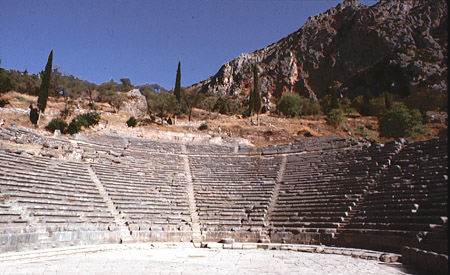
[As Pindar, declaiming in the theater at Delphi] "The fame of Pelops shines from afar in the races of the Olympic festivals, where there are contests for swiftness of foot, and the bold heights of toiling strength..."

 Master Thespian: You really captured Pindar. I felt like I knew the man. Genius!

Edmund Kean: No. Acting!

Now, then... have you prepared the fencing scene from Hamlet?

Master Thespian: Yes! [grabs fencing foils] Here is your foil.

Edmund Kean: Thank you! Very well, then. You shall play the part of  Hamlet. And I shall play the great...Edmund Kean! By the way, you were brilliant in  You're a Good Man, Charlie Brown as Linus in crisis.

Master Thespian: Oh, thank you. And, may I add, you were a perfectly raging queen! Elizabeth II, of course.

Edmund Kean: [an octave lower] Of course! [an octave higher] Now!

[They begin to fence furiously. Edmund Kean staggers backwards as Master Thespian swings his foil near him]

Edmund Kean: [covering his chest with his hand] Oh, Master.. M-master, you've cut me.. look how the blood gushes from my very veins!

Master Thespian: Oh, please forgive me, it was an accident..

Edmund Kean: Don't be silly! [opens his jacket to reveal no cut] Acting!

Master Thespian: Oh, you fooled me!

Edmund Kean: Of course I fooled you! I am the greatest actor of all time! I am...Kean! 


Master Thespian: [thrusts foil] En-garde!

[They begin fencing again. Suddenly, Master Thespian drops his foil and falls gracefully into Edmund Kean's arms]

Edmund Kean: Master? Are you hurt?

Master Thespian: Oh, Kean, I'm afraid we've played this acting thing too far. You've made worm's meat of me! Adieu.. adieu.. remember me. Look! [points] The face of death is near! And so.. I flail! [his legs kick before his body falls limp]

Edmund Kean: Master! [cries] I have killed my protege! How... how... how will you ever forgive me?

Master Thespian: [stands] Very good! I was merely acting!

Edmund Kean: So was I! I've fooled you again!

Master Thespian: No! It is I who fooled you! For I am dead... and merely acting alive!

Edmund Kean: Genius! Yet I've been dead, mort, cadaverous, extinct, deceased and defunct for over a hundred and fifty years! It is I who am the genius!

Master Thespian: Curses! I see I shall have to read The Life of an Actor by Pierce Egan, dedicated to what's-his-name, to learn the secret to acting alive while dead yet still alive but actually a ghost.


Edmund Kean: Ah, yes! Have I mentioned it? The classic tome dedicated to moi,  a life on the boards scarce in original boards, no copy in the original printed and illustrated boards at auction since 1975, unrecorded by Tooley, whose copy was that issued in parts within wrappers.

Master Thespian: A pox on your house! I shall read it anyway, yet, bringing the method of the great acting coach from Brooklyn, Stan Islavsky, to bear, I shall only be pretending to read, for I am...Master Thespian!

Edmund Kean: Genius!

Master Tespian: No. Acting!
__________


EGAN, Pierce. The Life of an Actor. Dedicated to Edmund Kean, Esq. The Poetical Descriptions by T. Greenwood. Embellished with Twenty-Seven Characteristic Scenes, Etched by Theodore Lane. Enriched also With Several Original Designs on Wood, Executed by Mr. Thompson. London: Printed for C.S. Arnold, 1825.

First edition. Quarto (10 x 6 1/8 in; 254 x 160 mm). xvi, 272 pp (a-b4, B-C8, D-Z4, Aa-Kk4). Twenty-seven aquatints with original hand-coloring. Nine text woodcuts. Printed and illustrated boards.

Abbey, Life 414. Prideaux. p. 308. Cf. Tooley 195.
__________

This post freely adapted from a sketch transcript from the December 7, 1985 episode of Saturday Night Live.
__________

Book images courtesy of David Brass Rare Books, currently offering this copy, with our thanks. Image of Jon Lovitz courtesy of NBC.
__________
__________

Wednesday, July 29, 2009

Them's Fightin' Words!

A bad July for fight fans as boxing greats Alexis Arguello, Arturo Gatti, and Vernon Forrest were murdered, Gatti by his wife, Forrest by thieves, Arguello by his own hand. Life was safer, calmer and more predictable in the ring.

There is much drama to this sport in which the essence of its athletes is revealed as in no other human activity, save war. But, as with war, there is no romance to boxing despite what some writers (Hemingway) would have you believe. Trust me on this.

Great books, though, and a ripe area for collection. The cornerstone volumes are:

Pugiltitle.jpg
MILES, Henry Downes. Pugilistica: Being One Hundred and Forty-Four Years of the History of British Boxing. Containing Lives of the Most Celebrated Pugilists, and Full Reports of their Battles From Contemporary Newspapers and Periodicals, with Authentic Portraits from Original Prints, Paintings, and Busts, Biographical Details, Personal Anecdotes, Sketches of the Principal Patrons of the P.R., Etc. The Only Complete and Chronological History of the Ring, from Fig and Broughton, 1719-40, to the Last Championship Battle of King and Heenen, in December, 1863. London: Weldon & Co., [n.d., 1880]. First complete edition. With one hundred portraits and miscellaneous text illustrations in black and white.

The first volume of this massive history of the “sweet science” in Britain was issued in 1866 and has become exceedingly scarce with only three copies located in KVK/OCLC, and LOC providing only a description from a contemporary catalogue. The whole was not actually completed and published until the edition of 1880, which contained a new preface by the author.

"As may be anticipated in a work consisting of more than 1500 pages, covering a period of 144 years, these volumes give probably the most comprehensive coverage of all the similar works" (Hartley, History & Bibliography of Boxing Books).

And,

EGAN, Pierce. Boxiana or Sketches of Ancient and Modern Pugilism from the Days of the Renowned James Figg and Jack Broughton to the Heroes of the Later Milling Era Jack Scroggins and Tom Hickman (1812).

boxers.jpg
Early 19th century English sportswriter/journalist Pierce Egan (1772 - 1849) wrote magazine pieces about boxing, which at the time was conducted under the Broughton Rules of 1743 despite being banned in England; fair play amongst outlaws. (The Broughton rules would be superceded by the London Prize Ring rules of 1838 which, in turn, were replaced by the Marquis of Queensberry rules of 1867 upon which the modern sport is based).

It was Egan who bestowed upon the sport its immortal descriptive moniker, “The Sweet Science.” ("The Sweet Science of Bruising!" in its complete form).

His boxing articles were collected into bound volumes and published under the title Boxiana; or Sketches of Ancient and Modern Pugilism. The first volume was published in 1813 (although the title page reads 1812, due to the arrangement, common at the time, where the book was sent to subscribers in installments before being released to the public.) Four more volumes followed, in 1818, 1821, 1824, and 1829. Illustrations were by George Cruikshank and are amongst his earliest work.

boxers2.jpg
Egan and Boxiana were reintroduced to a modern audience by journalist A.J. Liebling, whose series of essays on boxing published in The New Yorker from 1950–1964 frequently referenced Egan. Liebling titled his first collection of these boxing essays The Sweet Science (1956) in Egan's honor. (The other Liebling boxing collection is titled A Neutral Corner, 1990)). Liebling is THE finest writer on the sport, ever. In 2002, Sports Illustrated named The Sweet Science as the number one sports book of all time.

Liebling, a trenchant critic of the press, is primarily known for his eternal verities, “Freedom of the press is limited to those who own one;” and “People everywhere confuse what they read in newspapers with news.” He was also one of the twentieth century’s best writers in English about food.

First editions of Boxiana are scarce. The Folio Society issued a reprint of the first volume in 1976, and in 1998 Nicol Island Publishers of Toronto issued a reprint of the first volume and announced plans to reissue all five volumes.

Boxiana can be accessed and read via Google Book Search.

SJG.JPG
Here’s a bit of boxing ephemera I picked up in 1976. The guy pictured looks like Larry Talbot on a bad night during a full moon. As I’ve written elsewhere, each piece of ephemera tells an interesting story. The story here is short, sweet, and, given my milquetoast childhood and adolescence, completely unbelievable, so much so that I can hardly believe it myself: You hit me, it’s a misdemeanor. I hit you, it’s a class A felony, the judge throws the book at me, it hits me square up-side the head, and I have plenty of free time, 5-10 years, to read to my heart’s content: Mr. Bemis on Cell Block 9.

_______

Hartley 1365 (Pugilistica). Graesse II 464 (Boxiana).

AddThis
 
Subscribe to BOOKTRYST by Email