Wednesday, March 24, 2010

The Biggest Jew In Chicago Part 3

According to its press book, a movie was loosely based upon Terry Druggan, his partner Frankie Lake, and their activities.


William Wellman’s The Public Enemy (1931), starred James Cagney as Tommy Powers/Terry Druggan and featured Edward Woods as Matt Doyle/Frankie Lake. The 1923 tragi-comic death of Sam “Nails” Morton was depicted in the movie: An avid horseman, Nails (in the film, “Nails Nathan”) was riding in Lincoln Park one morning, a stirrup broke, the horse reared, Nails was thrown, the horse kicked him in the head and killed him. So upset and grief stricken were his Irish boon companions and partners that a hit squad was sent to the stable. They aerated the horse’s head. In the film, Cagney/Tommy/Terry is the equine’s assassin. In reality, it was Louis “Two-Gun”Alterie, an ex-gunsel for Druggan and member of O’Banion’s gang, along with a couple of other equestrian executioners in the employ of O’Banion.

In A Little Piece of History: The Village of Kildeer [a small community northwest of Chicago], Clayton W. Brown recounts that:

During Prohibition a gentleman named Terrance Druggan purchased about 215 acres of land on both sides of Long Grove in what is now Kildeer's Farmington Subdivision. Mr. Druggan had a nickname, ‘Terrible Terry.’ because he was a Chicago gangster, head of the Druggan-Lake Gang (or Valley Gang) prominent in the 1920's. His partner was Frankie Lake, an ex-Chicago fireman...They were both trigger-happy bootleggers who controlled a territory on Chicago's west side, between Cicero and Chicago's Little Italy, as lieutenants of Al Capone [they were not lieutenants of Capone; their gang was part of Capone’s syndicate]. Both Druggan and Lake, as young teenagers, joined the Valley Gang then controlled by...Paddy ‘The Bear’ Ryan and Heinrich ‘Big Heinie’ Miller. When they reached maturity they took it over.
Druggan was a dwarf-like character who lisped when excited, especially when shooting down an opponent or hijacking a liquor truck. Both men wore expensive fedoras, tailor-made suits and horned-rimmed glasses, which gave them the appearance of mild-mannered businessmen. Druggan was very religious, a devout Catholic, in spite of the his criminal activities. Druggan and Lake both became millionaires during Prohibition and rode in limousines driven by chauffeurs. They owned a private railroad car, but used it only once after it's windows were shot out by rival gangsters.
Most of their fortune came from Joseph Stenson who gave them 50 percent of five large breweries so they would stop hijacking his shipments and he could continue to operate. By 1925, Capone was taking more than 40 percent of the profits from their breweries, but provided Druggan and Lake with an army of gunmen to protect their territory. Both were imprisoned once for operating illegal breweries. Terry Druggan built a stucco-sided house on Long Grove Road, near Middleton…There formerly was a flagpole in front that could be seen from Rand Road. He had a handy man who's job it was to raise and lower the flag. If the flag was at the top of the pole it was O.K. for Druggan to come home, at half-mast it meant someone was there looking for him and he should keep going. Whenever Druggan heard a noise outside the house he would look out the windows carrying a machine gun. Having once been shot through one of the windows caused him to move into a rear bedroom. A subsequent owner of the house claimed there were bullet holes in the gutters and siding.

Of Druggan and Lake, Herbert Asbury, in Gangs of Chicago, wrote:

In 1924, for refusing to answer questions put to them by Judge James Wilkerson of the United States District Court, Druggan and Lake were sentenced to a year's imprisonment for contempt of court. Several months later a newspaper reporter called at the county jail to see Druggan, but when he asked for the gangster he was told: ’Mr. Druggan is not in today.’
’Then I'll talk to Frankie Lake,’ said the reporter.
‘Mr. Lake also had an appointment downtown,’ the jailer said. 'They will be back after dinner.’
The dazed newspaper man returned to his office, and an investigation disclosed that both Druggan and Lake, in return for twenty thousand dollars in bribes, as they testified later, had been given extraordinary privileges. Supposedly incarcerated and treated the same as other prisoners, they had actually spent much more time in Loop restaurants and in their own luxurious apartments than in jail; they had been permitted to come and go as they pleased, and the death cell of the jail had been turned into a private office where they received their gangsters and issued their orders.

James Cagney as Terry Druggan in The Public Enemy.

Poppy and Druggan loved cards, and Terry would occasionally come over to the house to play a few hands of poker or pinochle with him, continuing to do so, presumably, during his extra-joint jaunts into town.

The legal and illegal trade in liquor co-existed on an incestuous, go-along to get-along basis in an unspoken truce; there were family members on both sides. After Capone organized the various gangs and ended, for the most part, the constant hijacking of each others' trucks, some rogue mobsters would try to hijack legitimate whiskey but if they knew you and liked you they’d leave your stuff alone. Particularly if your name was Gertz. Poppy, because of his size, reputation, where he was brought up and the people he knew, was given wide- very wide - berth. Sometimes, though, things got a bit confusing on the streets.

One night, Poppy got a call and immediately phoned Great-Grandpa Bernstein: One of National Brokerage’s trucks was being followed by mob guys and Poppy needed help; Abe Bernstein né Degrafsky was no shrinking violet. Yet another Livak from Vilna, and, like Aaron Gershowetz, a horse trader but with bear in his heart and a hard-flint disposition borne of a childhood evading capture by Cossaks for 20-year enslavement into the Russian army, he and his were not be trifled with. Armed and dangerous, the two of them chased off the would-be hijackers.

Next morning, Poppy went for his regular haircut at the College Inn Barbershop in the Sherman House, the big hotel across from City Hall where all of Chicago’s politicians, gangsters and sports crowd congregated, and ran into Terry in the lobby. Druggan comically related the previous night’s incident, excitingly commenting upon the crazy Indian pumping shot at him from the truck ahead and the wild men spraying him from behind. (Both Poppy and Uncle Sol, because of their broad, thick, high cheekbones, somewhat resembled Native-American chieftains). Poppy didn’t know Druggan was the guy following his truck, and Druggan didn’t know it was Poppy’s truck or that Crazy Sollie was literally riding shotgun in it. Poppy set him straight. “Gee, Eddie, I had no idea.” No harm, no foul.

There were a couple of occasions when Poppy and Uncle Sol were pulled over by other Capone associates while delivering a shipment.

Bad idea followed by hard swallows and awkward salutations: “Uh. Hi, Eddie.” The other opens the back of the truck and is greeted by Sol with a shotgun. “Uh. Hi, Sollie.” End of incident.

Druggan was a good guy to know if you had a special problem. A few years before, Grandma was robbed on the street. When she told Poppy about it, he immediately knew what to do. He called Druggan, Terry got hold of guys who did it and retrieved Grandma’s jewelry. No word on the fate of the thieves.

Boxing was Poppy’s favorite sport. He spent a lot of time at Davey Miller’s gym getting to know the young guys who would later become well known fighters. He took my father to all the Friday night amateur fights that Miller ran at his gym. By the mid-Twenties, Miller had become the outstanding boxing referee in Illinois.

Come 1927 and Dempsey and Tunney are set to fight their rematch in Chicago. Davey was the appointed ref for the fight but Miller had a brother, Herschie, who was a member of Capone’s gang. Capone idolized Dempsey and Davey Miller was considered to be in Capone's pocket because of Herschie and Davey’s gambling operation. (Miller, a paragon of character and completely unintimidated by Alphonso, many years later admitted that Capone had approached him but that he had politely and firmly turned down Capone’s pre-fight bribe to make sure things went right. He didn’t report the Capone offer; having refused, it was of moot importance). Before the fight, Poppy took my father, seven years old, to Dempsey's training camp. It seemed that everyone in the fight crowd knew Big Ed; he was a star amongst them. Poppy and Grandma had ringside seats at Soldier Field at the then extravagant price of $40 each.

In an unusual example of backbone, at the last minute the Illinois boxing commission nixed Miller, Dave Barry was substituted as referee, and the result was infamous "long count." My father, listening to the fight on the radio at home, cried when Dempsey lost. Jack was Poppy’s friend and his as well.

Just a few weeks before that fight, Poppy went to see the Cubs play the Reds at Wrigley Field. As usual, he was in his box seat right behind the visiting team’s dugout. At the close of the ninth inning, a few men behind him gave Reds’ pitcher Pete Donohue the razz as he walked to the dugout. Donohue, assuming Poppy was the ringleader, “took him to task,” and spit-balled “Jew Bastard” at him.

Bad idea.

Poppy jumps out his seat, leaps over the railing onto the field and decks Donohue. The entire Reds team comes to Donohue’s rescue and a few others take the horizontal express before “hostilities” are officially ended by the erstwhile cop, Officer Hunt. Poppy is unscathed. A few of his upstanding and lowstanding friends in attendance then whip up the Jews in the crowd to Poppy’s defense as he’s taken away. Post-game anarchy ensues. Enter the Riot Squad. True to form, however, Poppy made a new friend. Though Donohue – his topography and ego seriously bruised - never stood up to the plate, Reds’ manager Jack Hendricks and Big Ed became buddies.

Contrary to the newspaper accounts, Poppy was taken to Summerdale Station and held uncharged and unbooked for a few hours. The police called Grandma at home and told her he would be home shortly. Grandma was relieved. Until receiving the call, she was supremely angry, assuming that Poppy was late for dinner because he was out playing cards. Starting a riot and getting arrested were the lesser of evils, as far as she was concerned; after all, he was defending Jewish honor.

Poppy also defended hers. One day, the two are strolling along State Street, Grandma walking ahead with a friend. On the corner, a wise-acre begins to wolf-whistle and catcall the ladies as they pass by.

Bad idea.

Said wise-acre was Harry, b. Hershel, Krakow, aka “Kingfish" or "King Levinsky,” a tall, husky, popular, somewhat buffoonish Jewish heavyweight contender with a crushing overhand right who fought Max Baer and defeated Dempsey, ending the ex-champ’s comeback. Kingfish was renowned for his colorful post-fight commentary - “I hitted him where it hoit da most. Da King ain’t no sucker, ya know,” he reportedly declared after his fight with Jimmy Slattery – and his unorthodox defense methods in the ring: An early conservationist, rather than waste valuable energy moving out of the way he blocked punches with his face.

Kingfish, aka King Levinsky.

Poppy laid him out cold on the sidewalk.

Levinsky’s post-fight commentary for this quick business is lost to history. But though his manager at the time was Davey and Herschie Miller’s brother, Al, there were no repercussions for Poppy. After all, Davey and Herschie were his friends, and Kingfish was seriously out of line; any man would have done the same. Suffice it to say, after Poppy hitted him where it hoit da most, King Levinsky became his friend: Da King wasn’t no sucker, y’know.

Later on, when there was a big fight in New York, the 20th Century Limited would run from Chicago and all the politicians, gangsters and sporting crowd would be on the train, including Poppy, so his circle of friends and acquaintances grew larger. He was the biggest, toughest Jew in Chicago and in the liquor business, a magnet for friendship and respect.

_________

Part [1]  [2]  [3] [4] [5] [6]

London Library Lightens Up

The London Library, 14 St. James Square.
(Image Courtesy Of The London Library Website.)

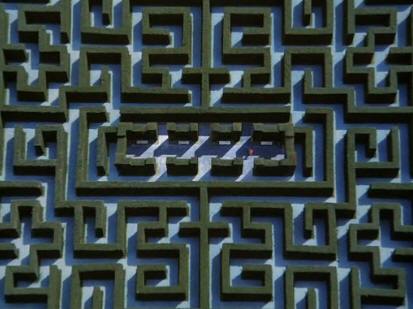
Remember the hedge maze in Stanley Kubrick's film The Shining? Acres of impenetrable green walls, artfully arranged to bedevil intrepid explorers determined to find the calm, cool center of a secret, secluded space. Each new corner promises one more step towards the goal, but more often that not results in yet another dead end. But even those dead ends have a certain beauty. Each is a quiet oasis among the leaves, often with a marble bench on which to rest and reflect before continuing the journey to the end of this botanic rainbow. Now imagine a library that over time became just like that labyrinth. Miles and miles of never ending bookshelves arranged with such baffling intricacy that finding a specific book is more challenging than getting to the center of a hedge maze. Actually there's no need to imagine it. Just pay a visit to the London Library at St. James Square.

The St. James Entrance To One Of Nearly A Dozen Levels Of Book Stacks
(Image Courtesy Of The London Library Website.)

The London Library bills itself as "a university library for people who are no longer at university." It is the largest independent lending library in the world, with over one million books and periodicals housed on some 15 miles of open-access shelves. Over 95% of the collection may be freely browsed, and 97% is available for loan. The central tenet of the library is that since "books are never entirely superseded, and therefore never redundant, the collections should not be weeded of material merely because it is old, idiosyncratic or unfashionable: except in the case of exact duplication, almost nothing has ever been discarded from the library's shelves." This has resulted in a library chock-full of books, ten floors of them and growing, with another half-mile of shelving required every three years. And all of this in a library that has been located in the same London townhouse on posh St. James Square since 1845.

Does This Look A Bit Confusing? Vintage Signage At The London Library.
(Photo Courtesy of Jake Tilson of Haworth Tompkins.)

The doors of the London Library opened on May 3, 1841 at Number 49 Pall Mall, the first floor of The Traveller's Club, with a mere 3,000 volumes. Its first location consisted of three rooms and a coal cellar. It was founded by historian, biographer, and world-class curmudgeon, Thomas Carlyle. He became disenchanted (to say the least) with the British Library's closed stacks and non-circulating collection. In a move that most of us could only dream of, Carlyle decided to found his own library, where open stacks could be perused at leisure, and if by serendipity the perfect volume was discovered, it could be borrowed for a few weeks.

Carlyle's London Library was for members only. Those wishing to enjoy the collection submitted their names to the librarian, who passed them along to a membership committee for consideration. Approved members paid an annual subscription fee. The library began with 500 members including Charles Dickens, William Makepeace Thackeray, and William Ewart Gladstone. In what was a portent of the shape of things to come, by 1845 the Pall Mall location was outgrown, and the London Library moved to its present St. James Square address.

A Section Of London Library's Book Stacks, Unchanged Since 1898.
(Image Courtesy Of The London Library Website.)

The St. James Square townhouse was originally rented, but was purchased outright in 1879. This allowed for a higgledy-piggledy, hodge-podge of additions over the years to accommodate its ever-growing collection. The building was entirely reconstructed in 1896-98, becoming one of the first steel-frame buildings in London. Major additions, accomplished by purchasing adjacent buildings and real estate, took place in 1913, 1931, 1995, and 2004. The library eventually snaked the width of an entire city block, through various buildings and extensions, from St James Square to Duke Street.

The Library Survived Bomb Damage In 1944.
(Image Courtesy Of The London Library Website.)

The result of over 160 years of expansion is a jumble of intertwined buildings and assorted extensions, assembled piecemeal and jammed into the property behind the library's genteel facade. Books are spread over nearly a dozen uneven, mismatched floors in rooms marked by hidden nooks, crannies, and alcoves, and linked together by narrow corridors, gloomy passageways, and clattering iron staircases. Members often rely on the institution's librarians not only for bibliographic advice, but also for simple directions. Now all of that is about to change.

The Main Reading Room Of The London Library.
(Image Courtesy Of The London Library Website.)

The London Library, a monument to its mid-nineteenth century founders, with iron grille and opaque glass floors, leather armchairs and leather-bound books, and a unique cataloging system devised in the late 1800's, is about to move into the 21st century. For the first time, an architect with a complete plan for the entire property is in the process of giving this great Victorian lady a makeover.

A Section Model Of The Remodeled London Library.
(Image Courtesy Of Haworth Tompkins.)

London-based architectural firm Haworth Tompkins has made it their business to reorganize this labyrinthine library so members might find a particular book without risking the fate of Jack Nicholson in Kubrick's hedge maze. The 25 million dollar remodeling project is one of the largest ever devised for a historic London building. Design and construction problems have been monumental. The library staff have insisted that the building remain open, and the entire collection accessible, throughout construction. Firm constraints were placed on the number of hours construction noise would be tolerated. (For example, 10 AM to Noon, and 2 PM to 4 PM are designated "quiet times" each day.)

The Library's Skylight Before The Face Lift.
(Image Courtesy Of The London Library Website.)

The logistics involved in working at a site surrounded by valuable books, and their very particular readers, are only half the battle. The Library's location, amidst an upper crust neighborhood full of luxury high rises, allows for only very limited access for dozens of workers and their machinery. The site has almost no storage space suitable for building materials. Additionally, all areas of the existing buildings must either remain accessible despite the on-going work, or have all volumes relocated before being closed off. Quite a tall order for those tasked with a tremendous transformation.

The Skylight Area Post-Op.
(Image Courtesy Of The London Library Website.)

The first two phases of the London library's face lift have been completed. (Two further stages are yet to come.) An all new reading room especially designed for the library's bound volumes of the London Times is up and running, complete with custom-made reading tables and movable shelving. A central skylight has been removed and replaced by a two story glass roofed reading room for the periodicals collection. The "Issue Hall" (what we on this side of the pond call a "circulation desk") and main reading room have been lightened and brightened through the removal of structures added as passageways to the book stacks. These walkways have been replaced by new elevators and ramps to provide wheelchair access. The Library's original Victorian main staircase remains unaltered, and the architect is determined to maintain the great lady's "bespoke grandeur."

The "Issue Hall" Circa 1935.
(Image Courtesy Of The London Library Website.)

All of which should mean members can locate volumes without getting lost in a labyrinth. But one challenge, albeit a charming one, remains. The London Library still uses its own idiosyncratic, arcane cataloging system (.pdf format) created by librarian Charles Hagberg Wright in 1894. Books are arranged by subject according to "shelf marks" (.pdf format) and alphabetically by either author or title within subject section. This is both wonderfully entertaining and incredibly baffling in turn. It leads to such gems (in the "F" section alone) as "Science-Miscellaneous: Falconry see Fowling," "History: Filibusters see Buccaneers, Privateers," and "Science-Miscellaneous: Farriery see Horseshoeing."

Fortunately, The Stacks Will Always Offer Plenty of Places To Get Lost In.
(Image Courtesy Of The London library Website.)

Surprisingly for such a tastefully traditional institution, the London library has an incredibly detailed and multilayered website. (Kudos to web designer Ned Campbell and the firm of Jones LaFuente.) It includes a complete guide to the shelf marks, a detailed history of the institution complete with historic images, and a much needed map of the library's various and sundry reading rooms and book stacks. All of which indicates a desire to help the intrepid reader navigate the maze. Thankfully this does not eliminate the possibility of blissfully meandering through the grand old collection, and intentionally getting lost in a wistful remembrance of libraries past.

Monday, March 22, 2010

The Biggest Jew In Chicago Part 2

Julius Rosenwald wasn’t the only one keeping an eye on Ed Gertz.

Concurrently, Chicago was in the midst of bitter Taxi Wars. The taxi business was still developing, wholly unregulated, and competition amongst growing cab companies and independents was fierce, endangering drivers, riders and pedestrians who had to dodge the pack of cabs that would descend upon potential fares en mass with contesting drivers invariably getting into fights. Poppy supplemented his income working as a schtarker – muscle - for John D. Hertz, whose Yellow Cab company was asserting dominance.

In his youth, Hertz (b. Sandor Herz, Slovakian Jew) hung out in boxing gyms and became a reasonably skilled pugilist, fighting under the name "Dan Donnelly." Now, establishing himself as a entrepreneur who would become a leader in the transportation industry, Hertz put Poppy in the driver’s seat, making him his top street troubleshooter/negotiator. Living in the upscale German-Jew part of the Southside, he’d no doubt heard of Big Ed Gershowetz, perhaps from Rosenwald himself, another Southside resident. Here was a good kid but tough, who could keep his head while asserting strength but if necessary deliver the hard knocks. Poppy’d get a distress call from the street, race to the scene and either part the combatants without incident, knock heads together, or end the fight decisively in Yellow Cab’s favor. Yellow Cab won the war.

As respected and successful Jewish businessmen, Rosenwald and Hertz were his early influences and role models. It is not unreasonable to conclude that it was while working for Hertz that Poppy changed the family surname.

In July of 1919, an angry Polish-American mob swept through the Southside, looking for Jews. Riotous, they’d been whipped up into an anti-Semetic frenzy by the rumor that one H. Kahn, a local Jewish merchant, had murdered a Christian child as part of a mythical, occultish Jewish blood-letting ritual – a decent piece of matzo traditionally impossible without a dash of gentile red-cells in the mix. Southside Jews were being terrorized and beaten. To the rescue, Davey Miller and his gang of tough Westside Jews poured into the Southside. And while there is no direct evidence, I’m quite certain that Poppy was right there, next to Miller; Uncle Sol was nearby, for sure. This was Poppy’s kind of scrap, and Uncle Sol lived for this sort of action.

At age 16 Uncle Sol lied and enlisted in the army, anxious to get into WWI. His platoon sergeant was guy from Chicago, born in 1893 and eight years older than Sol. He was another Jewish tough who feared nothing – nothing - and from the Westside. Why he’s practically meshpucah, family! They’d probably heard of one another. After all, Samuel Morton né Markowitz aka “Nails” Morton was a popular Chicago anti-Semite basher who protected harassed Westside Jewish merchants and school kids; before the war, Morton organized a Jewish defense club to keep Jew-baiting Polish gangs out of “Jewtown.” It’s likely that Uncle Sol and Poppy were part of Morton’s proto-Jewish Defense League. Sam became a war hero, won the Croix de Guerre for bravery (he captured a German machine gun nest despite severe wounds) and was awarded a battlefield commission to first lieutenant. Sol was promoted to platoon First Sergeant, “Nails” old job. After the war, Sam received a hero’s welcome from the Westside Jews. Then he got down to business.

He ran an automobile garage that fronted for his extra-curricular activities – car theft, gambling and, after the Volstead Act became law, distributing booze and beer via his fleet of trucks. Because the Jewish gangs were too small to compete, leaders had to align themselves with either the Italians or Irish. Nails allied himself with Dion O’Banion, the gangland florist, distributing O’Banion’s booze. After the war, Nails Morton gave Uncle Sol his first job, as an armed driver. Sol would hopscotch between the legal and illegal trade until finally settling on the good foot.

Given his background, Poppy could have easily strayed from the straight and narrow as so many of his friends from the neighborhood had done. And a few in the family.

One of his first cousins was Louis “Sleep-Out Louie” Levinson, the son of Maurice’s sister, Poppy’s Aunt Mary. Sleep-Out earned early fame as a second-story man, a gifted burglar, and, later, a well-connected gambler of renown, casino owner in Newport, KY, and person of interest to a couple of Congressional Sub-Committees. Sleep-Out died prematurely, not by natural means.

Sleep-Out's brother, Eddie Levinson, was more fortunate. At a young age he discovered that paradise was a pair of dice, and, before and after WWII, he and his friends had the bookie concession at fourteen Miami Beach hotels, courtesy of his New York friend and associate, Meyer Lansky. In 1946, Uncle Eddie arranged for my parents to honeymoon in Miami, first-class. Soon afterward, he managed the Riviera in Havana and the Fremont in Las Vegas, and later was partner and casino manager at the Sands, each job as Meyer’s man. In the mid-1950s, mom and dad went to Vegas. Uncle Eddie put them up, deluxe accommodations, and made arrangements for them to have dinner and see the shows at the other hotels in town – all seven of them; Las Vegas was a small town then - everything on him, with one condition: they were forbidden to gamble, or, rather, he was so breezily dismissive of amateurs, i.e. those other than The House, to wit: losers, that they were too ashamed to do so. When I was a kid, Uncle Eddie came to our house for dinner a few times. Nice guy. Last time I saw him was at my sister’s wedding. He lived long and died peacefully.

One of Uncle Louie and Uncle Eddie’s sisters married a mob-connected accountant. After they divorced, he was bumped off. I’m assured the two events were unrelated.

Why Poppy and Uncle Sol didn’t take a bad turn remains unclear but perhaps their father had something to do with it. Though Maurice – a dedicated anarchist (until becoming a small business owner) whose method of fitting a suit entailed having the client lie on the floor while he precisely outlined the supine figure in chalk, ultimately creating a garment of surprisingly accurate fit - was Orthodox, and, until early adulthood, so was Poppy, a sense of right and wrong was instilled not by religious training alone. When Poppy or Uncle Sol disobeyed or got in trouble, Maurice - a solid six-feet and a tough customer in his own right – would grab them by the ankles, upend them, and bounce their heads on the floor. Though as crude as his suit-fittings, paradoxically, over time, this disciplinary ritual had a salutary effect upon the pre-frontal cortex.


c. 1919.

In 1919, Poppy married Mildred, “Molly,” one of the eight children of Abe and Celia Degrafsky. She attended her first day of school with her best friend, whose last name was Bernstein. And so, courtesy of a school enrollment clerk, when she returned home that day she was Mildred Bernstein. A popular accident, apparently: the entire family joined in.

The author's grandmother, Mildred Gertz, c. 1921.

After finishing his studies, Poppy went to work for his maternal uncle, Dave Belson, as a draftsman at his manufacturing plant. But a sit down job for a stand-up guy was no life; he was restless and hated it. One night in 1920, at dinner at Great-Grandpa Abe Degrafsky-Bernstein’s, his brother-in-law, Harry Blum, married to one of Grandma’s sisters, told Poppy that the State of Wisconsin was ripe for the sale of medicinal whiskey and liquor for food processing and suggested that Poppy go up there and see what he could do. Next day, Poppy went up to Milwaukee. He opened up some drug store accounts and two bakeries for Blum, discovering that he had a gift for sales. The following day, he saw Uncle Dave and turned in his T-square and protractor. That was the end of his engineering career and the beginning of forty-five years in the liquor business.


It is around this time that Poppy developed a taste for sartorial splendor, which would last all his life. In an early photograph he’s dressed for success, starched collar, tie with stickpin, camel’s-hair coat, fedora, and walking stick. He’s twenty-two years old. Custom-made (they had to be – nothing fit off the rack) suits, shirts, and sport jackets became de rigueur. He cut quite a figure: huge, ramrod-straight posture, manicured nails, elegantly dressed, neatly groomed, he radiated power and authority and would do so for the rest of his life, long after power and authority had faded.

To implement the Eighteenth Amendment to the Constitution, on October 28, 1919, Congress passed the Volstead Act, which legislated the prohibition of alcohol in the United States effective January 16, 1920. Under Title II, sections 3, 6, and 7, alcoholic beverages were legal but strictly regulated for sacramental, medicinal, and industrial purposes. And so, parallel to the fast-growing illicit trade in the sale and distribution of booze for strictly recreational use, a legal business grew selling alcoholic beverages to drug stores, churches, synagogues, and bakers (without rum cake, the nation crumbles).

After a year working for Blum, Poppy went out on his own. He partnered with two older, more experienced men and formed the Royal Drug Company. After a few months, he noticed that the inventory in the warehouse was less than what was on the books. So, one night, he staked-out the warehouse from his car, parked across the street. Soon, a truck pulled up, his two partners got out and started taking goods out of the warehouse, apparently for diversion into the illegal trade, which paid a premium for the real McCoy. Poppy jumped out of his car, raced across the street, and beat the shit out of his partners. End of the Royal Drug Co.

Edward M. Gertz, 1923.

He then formed Retail Druggist Supply Co., a partnership with an honest guy that amicably dissolved after a year. Now, Poppy rejoined brother-in-law Harry Blum as a partner in National Brokerage Company which, in addition to selling legal alcohol, traded in warehouse receipts for pre-Volstead Act-manufactured whiskey that the government stored in bonded warehouses for release to receipt holders only. Control the receipts, you controlled the legal flow of booze. The other partners in the business were Moe Rieger, married to Blum’s sister; Joe Levy, who was married to Great-Aunt Eva Bernstein; and Joe Guzik, brother of Jake “Greasy Thumb” Guzik, Al Capone’s loyal business advisor and financial wizard. Aunt Bernice, Poppy’s sister, kept the books.


1925 Cadillac V-6 4-door sedan.

These were good times. Upwardly mobile, Grandma and Poppy moved to the North Side and in 1925 traded up from a Hudson Super-6 to a Cadillac V-6 4-door sedan, a monster car but Cadillacs had not yet become the standard for luxury in America.

In 1928, Poppy bought a light green Buick Brougham, Buicks at the time the hottest, most reliable, well-engineered mass-produced cars in the world, the Brougham the top of the line and more prestigious than a Caddie. Money was coming in, oh yes, though not in the fabulous sums that many who Poppy knew were raking in. His old friends since youth, Terry Druggan and Frankie Lake, for instance, were becoming extravagantly wealthy.

And who were Druggan and Lake?
_______


Part [1] [2] [3] [4] [5] [6]

"Sex Life of a Cop" Chows Down Big Donuts at Paperbacks Show for Record $

Saber Books SA-11, true first edition, first printing.

In 1959, a trashy paperback was issued by Saber Books. Thirty years ago, when I began to take a collecting and scholarly interest in soft- and hardcore erotic pulp literature, if I paid 50¢ for it I was under the influence of something.

Yesterday, I saw a very attractive copy of the true first edition, first printing of Sex Life of a Copy by Oscar Peck (pseud.), Saber Books SA-11, at the Paperbacks Show in Mission Hills in Southern California.

The asking price was $200, a record for this book. Ten years ago, copies in similar condition were selling for $100.

What’s the story with this book? Who in their right mind would want to own a copy?

During the mid-’50s, Fresno, an agricultural community in central California and “Raisin Capital of the World,” had a socio-cultural raison d’etre: The books of Sanford E. Aday, a failed writer turned publisher and distributor, whose softcore imprints included Fabian, Vega, and Saber.

“Probably no one has given the FBI more trouble in the obscenity area than Sanford E. Aday. Certainly the Justice Department lawyers have had no tougher or more frequent customer on Interstate Transportation of Obscene Material (ITOM) than this man” (Peter Collier. Pirates of Pornography. Ramparts, August 10, 1968).

The most notorious of Aday’s ventures into scheis und dreck was the infamous Sex Life of a Cop. By today’s standards, it is innocuous fluff; by Cold War standards, it was evidence of Satan’s influence upon American culture. Prosecuted by the Justice Department in 1963, Aday was indicted on eighteen counts of ITOM but convicted of only five; of the eight books named in the indictment, Sex Life of a Cop was the only one found obscene under the Supreme Court’s Roth legal formula. Aday and his partner, Wallace de Ortega Maxey, were both sentenced to twenty-five years in prison, the stiffest sentence for an obscenity conviction in United States history.

Aday belonged to the early gay rights organization, the Mattachine Society, with Ortega Maxey, a retired Catholic priest who became minister of the Universalist Church in Los Angeles, where the Mattachine Society held their meetings. Aday was amongst the first to openly publish gay- and lesbian-themed books. Collecting interest in this misdemeanor has dramatically risen as word of it and its backstory and significance in the fight against censorship has become more well-known.

And that’s why a first edition, first printing in decent condition is now fetching $200. The books of Sanford E. Aday are significant enough for California State University - Fresno to house a collection of them.

While the trade in rare and antiquarian hardcover books is a mature business, the world of paperbacks is young and lively. I expect prices will continue to rise for the most desirable titles as new collectors, frozen out of the market for classic literature (or whatever) in hardcover, continue to migrate to an area of book collecting with prices still within reach of the average citizen.

I always learn something new at the Paperback Show. I am likely the last person with an interest in paperbacks to have picked up this little factoid but for those who don’t follow the paperbacks scene I offer this little wham-o:

 First edition under this title (1955) of Casino Royale by Ian Fleming. 
"She played a man's game with a woman's weapons."
Bond's got no chance with this broad.

Those who may be under the impression that the world of vintage paperbacks simply offers a cesspool teeming with crass, exploitive and sensational, sexed-up stinky-fish lit. unsuitable for living room bookshelves will be pleased to learn that the finest in Literature by the most respected novelists and short story writers has always been reissued by paperback publishers. It's a classy business.


I rest my case.
_______________


Portions of this post originally appeared in Sin-a-Rama: Sleaze Sex Paperbacks of the Sixties, to which I contributed a chapter on pulp porn publishers on the West Coast.

Sunday, March 21, 2010

Winds Of War Stir Nation's Libraries


Illustrator and theatrical designer Charles Buckles Falls created this lithograph to promote the American Library Association's First World War book drives for soldiers. Donated books were seen as a key to keeping up morale, and stocked temporary wartime libraries, as well as being given directly to soldiers. The most popular books on the frontlines were adventure and detective fiction, biographies, military histories, and travel journals. As the war wound down, soldiers began to request titles on farming, business, engineering, construction and other trades in preparation for the return to civilian life.

It was the first, but sadly not the last, modern global war. Billed, with what is now seen as insanely optimistic myopia, as "The War To End All Wars," and "The War To Make The World Safe For Democracy." Now we call it "The First World War." The US was entering this war several years in, after a period of deliberate isolationism. It would be the nation's first war on distant shores. Support for the war effort was soft. The armed forces could be built up through the draft. But how to win over the men, women, and children on what came to be known as "the home front?" A traveling library exhibit, sponsored by the National Endowment For The Arts (NEA), spotlights a group of graphic artists and illustrators who used their talents to persuade citizens to stand with the soldiers, and make sacrifices for the cause.


The exhibit, The Winds and Words Of War, showcases images created by the Division of Pictorial Publicity, part of the Committee on Public Information of the US government. Assembled within weeks of the nation's entry into the war, this group was charged with creating posters which would build patriotism, raise funds for war bonds, encourage enlistment, and increase volunteerism. More than 300 of America's most famous illustrators, cartoonists, designers, and fine artists donated their services to the division from April 1917 until the armistice in November 1918. They created some 700 posters, more than were produced by any other nation in the conflict. Forty of these original works, on loan from the permanent collection of the San Antonio Public Library, make up the traveling exhibit.


Magazine illustrator Harrison Fisher created this poster to support the desperately needed expansion of the Red Cross. The organization was struggling to cope with the massive increase in demand for field hospitals, hospital ships, and services to displaced persons and POW's. Harrison Fisher was known as "The Father Of A Thousand Girls." At the height of his popularity in 1913 he was earning $75,000 a year for his magazine illustrations of an idealized "American Girl," described by Cosmopolitan Magazine as: "Young with the youth of a new country, strong with the vitality of buoyant good health, fresh with clear-eyed brightness, athletic, cheerful, sympathetic, and beautiful." Despite such hyperbole, and all the cash that came with it, Fisher became tired of drawing "marketable females" and turned exclusively to portraiture at the end of his career. Two of his subjects were F. Scott and Zelda Fitzgerald.


A well respected illustrator of ships and seascapes, William Haskell Coffin created this striking image of medieval war heroine Joan of Arc to encourage American home front heroines to buy War Savings Stamps. Stamps could be purchased for a dime or a quarter, and collections could ultimately be converted into War Bonds. (The program raised over one billion dollars for the war effort.) Coffin enjoyed great success as a commercial artist, creating iconic beauties to sell calendars, clothing, soft drinks, and cosmetics. At the peak of his fame, Coffin married a popular stage actress, Frances Starr, and the two became glittering fixtures on the New York social scene of the 1920's. They divorced in 1930, and Haskell's fortunes took a downward turn. He committed suicide in 1941.


Howard Chandler Christy took naturally to creating wartime posters: he had begun his career in Cuba, illustrating battlefield scenes of American troops during the Spanish American War. He later turned to more commercial forms of illustration, specializing in images of women as independent as they were beautiful. Here he combines the two strands of his career to encourage enlistment in the Navy.


Another poster by Howard Chandler Christy, this one to help finance the federal government.
Driven by the need to purchase munitions and supplies, and to provide pay for increasing numbers of soldiers, the US Treasury Department called on citizens to invest in Liberty Loans and War Bonds. This poster helped to make the Third Liberty Loan drive more successful than any previous fundraising effort in US history. (Between 1917-1918, Americans lent $21.5 billion to the war effort.) Like Harrison Fisher, Christy later became equally well-known as a portraitist. One of his works was a commissioned portrait of President Calvin Coolidge.


James Montgomery Flagg is best known for creating the iconic enlistment posters of Uncle Sam. (The face is the artist's own, used to spare the trouble and expense of hiring a model.) This poster shows him in a less flamboyant mode. It was created for the New York City Mayor's Committee, formed to assist with the war effort. Flagg was a child prodigy who began his near-50-year illustrating career at age 12, when he was hired by St. Nicholas Magazine on the basis of a few sketches he had drawn in Central Park. By 15 he was a staffer at Life and Judge Magazines. Over 4 million copies of Flagg's Uncle Sam poster alone were produced during the First World War, and the image was equally popular during the Second World War. Flagg was the highest paid illustrator in the US throughout much of his career.


"The Winds and Words of War" exhibit premiered at the San Antonio Public Library in 2008 in conjunction with the 90th anniversary of Armistice Day, and marked the first public display of the posters since 1933. The entire collection of lithographs was given to the library by a single generous collector, the late Harry Hertzberg. The traveling exhibit formally debuted at the Chicago Public Library, and has since been shown at the Wichita Public Library, The Kansas City (Missouri) Public Library, and the Evansville (Illinois) Vanderburg Public Library. It opened on March 19, 2010 at the Harford County (Maryland) Public Library, and will move on to the Memphis Public Library, and to Sarah Lawrence College in New York State later in the year. These works of art stand as a beautiful monument to an ugly war: the death toll for "The Great War" is estimated at from 15 million to 65 million people worldwide.

The Biggest Jew In Chicago


The following six-part series is excerpted and adapted from The God and the Ghost: Two Grandfathers, a work in progress.


***

 The author's grandfather, Edward M. Gertz, c. 1949.

My father dreams about his father. Dad’s ninety. Poppy’s been dead for thirty-four years.

In these dreams, Dad and Poppy, both adults, have a great, feel-good father-son relationship, man to man, as equals. Things were not, in reality, quite that way. Poppy’s shadow fell over my father like a sheet of lead. A long sheet, too: I’ve spent most of my life wearing it as a suit that felt great to have on but when seen in a mirror with clear eyes was obviously way too big for me. Too big for Dad, too. Poppy was too big for both of us.

CUB FANS BALK ARREST, RIOT

One hundred policemen from three North Side stations late yesterday answered a riot call to break up a crowd of several thousand baseball fans that had gathered about a policeman and a prisoner outside the Cubs’ ball park.

The clash began toward the close of the game when pitcher Pete Donohue and other members of the Cincinnati team engaged in an argument with Edward Gertz, 28, of 1436 Pratt Blvd., a manufacturer, who was sitting in a box above the dugout. The players charged Gertz had gone to extremes in reviling them throughout the game. As the last inning was being played the Cincinnati management summoned Policeman G.A. Hunt, who arrested Gertz.

Supporters of Gertz, the officer said, incited the crowd to anger and threats were made to free the prisoner. Hunt then put in the riot call and the reserves dispersed the crowd with difficulty.
Taken to the Town Hall station, Gertz was charged with disorderly conduct. He was later released.”

Chicago Herald and Examiner
July 6. 1927.


CUBS WIN 7TH IN ROW; BEAT REDS, 8 TO 5

A couple of big innings yesterday and McCarthy's Cubs were in possession of their seventh straight win…

Small Riot Develops

At the close of the game a row was precipitated when Pete Donohue, Reds' pitcher, took a Cubs fan, Edward Gertz, 1434 Pratt Boulevard, to task for remarks he had made concerning the Cincinnati team. Policeman G.A. Hunt separated the pair as hostilities commenced. Some one turned in a call to the Town Hall station which brought several squad cars to Wrigley field but no arrests were made."
Chicago Tribune July 6, 1927


The reporters were being polite. “Manufacturer” was a misnomer off by a mile and “hostilities” an understatement. He was 6’4”, 240lbs – rare stature in his era - with an intimidating physique and glare that could scare the stripes off a tiger. But though he looked like one and was in the liquor business in Chicago during Prohibition, he wasn’t a mobster.

He was the god of my youth.

On Sundays, when they lived in New York, we would go to Manhattan from our home in Queens to visit Grandma and Poppy. They lived in an apartment at 240 Central Park South that seemed larger than it actually was and modestly swank. Poppy drove a Cadillac, Grandma wore mink. It seemed he was the King of New York. Long lines at restaurants? Ignored. No reservations, no problem. Poppy would steer us to the front door, the doorman would breeze us in, the maitre’d would give him a warm greeting – “Mr. Gertz, so good to see you, right this way” – and we’d be immediately seated.

He was a regular at Lindy’s, the renowned Broadway restaurant immortalized in Damon Runyon stories as Mindy’s, where show business personalities, the sports crowd, gamblers, underworld types and solid citizens congregated over lox and bagels; we got the red carpet routine when we’d go there. He and Leo "Lindy" Lindermann were pals. He was friends with Lou Walters, owner of New York’s famed nightclub, the Latin Quarter, and father to Barbara; with Jules Podell, owner of the Copacabana; with Toots Shor, who’s eatery was where the elite of show business and the sports world hung out (though he thought Toots a loud-mouth). Ex-champ Jack Dempsey’s restaurant on Broadway was a second home; they were old friends from way back.

No matter where we went, Poppy was treated as a potentate with deference shown by all. His friends, countless; he knew everybody, it seemed: the sunny, the shady and the dark, trading smiles and firm handshakes. He was never awestruck by celebrities; if anything, it was the other way around. Heads turning when we’d walk down the street and whispers were a matter of course. People naturally assumed he was a big shot of some sort. When he walked into a room, all eyes fixed upon him; he possessed a personal force that was palpable.

He was a gentleman of the old school, courtly and polite. He always gave my sister and me expensive gifts; we had carte-blanche at F.A.O. Schwartz. He’d have bought us the world if we asked. I’d watch him shave in the morning; his whiskers were tough, like him. He took my side when my father was angry with me. “Everything copacetic? he’d ask. I’d make what passed for a clever remark and he’d exclaim to all, “the kid’s a pistol!” with earnest pride. The words warmed me; I was okay in his book. His scent of cigars fused with Aqua Velva after-shave remains with me, as do the size and thickness of his fingers: I’d slip his massive diamond-studded Masonic ring on my thumb and have room for another thumb and a pinkie, too. Hell, I could have slipped the ring onto my wrist. He would tease me with displays of mock toughness: towering over me in fighting stance, his fists the size of cannon shot, his eyes narrowed, he’d feint punches, mock-menace growl, make me hesitate before I’d laugh, then he’d widen his eyes, open himself and corral me into a hug that stayed with me for hours afterward. He inspired awe in strangers. He certainly inspired awe in me.

Though it means nothing in the grand scheme of things and even less to my cousins, I am the son of the son of the first son of the first son of Aaron Gershowetz, horse-trader, born 1826 in Vilna, Lithuania, land of Litvaks and giant, bohunk Jew-boys. First-born, Morris, (b.1865), at the behest of Aaron, sold horses to the Russian army, took the money and ran, landed in England, met Grace Grossman, Galitzianer, married her, and in 1896 journeyed to Chicago where they settled on Halsted Street in the 20th Ward on the Near West Side.

The “Bloody 20th” was a feral slum where poor immigrant Italians and poor immigrant Irish and poor immigrant Poles clashed with one other but most of all battled with the poverty-stricken Russian Jews who were flooding into the squalid area crowded with fire-trap rickety wood houses built on top of one another, airless brick tenements, streets teeming with pushcarts, horse manure, sweatshops, rag dealers, junk dealers, small merchants and tradesmen, vice, crime, vivid life and desperate humanity. There goes the neighborhood, a patchwork of highly segregated ethnic enclaves locked in a Darwinian dynamic. Mayberry it wasn’t: It was known as "the Darkest Corner of Chicago." The family residence, at 383 S. Halsted, was just a few blocks down the street from Jane Adams' Hull House.


He was born Milton Gershowetz, the first of Morris-anglicized-Maurice's and Grace’s six children, in 1899. Known in the family throughout his childhood as Edmilt, he appears to have exited the womb at full, mammoth size; there are no pictures of him as a little boy. The Edmilt handle went fast. He changed his name to Edward M. In late adolescence, he changed surnames. He was first-generation American, not a Litvak. So Maurice, who’d imported his younger brother and five sisters – the instantly anglicized-upon-landing Marvin, Fanny, Mary, Esther, Bessie, Sarah and Annie – followed suit. And then the entire family. The Gershowetz’s of Lithuania became the Gertz’s of Chicago, a name a little more American with a little more class – Maurice Gershowetz became Maurice Gertz, Fine (impoverished) Tailor – and a little less ethnic with a little less baggage. But not much. (A Gershowetz for ninety-one years by the time he arrived in 1917, Aaron saw no point in becoming Gertz).

The Gertz's of Chicago c. 1925.
At center is the patriarch, Aaron Gershowetz, age 99;
my father, Kenneth G. Gertz, age 5, sits upon his lap.
Maurice Gertz is 3d from left, back row.
My grandfather is right of center, back row.
Sol is 5th from left, back row. Maurice's sister's,
my great-great aunts - aka the defensive line of
the Chicago Russian Bears - occupy the second row.

Big Ed had to defend himself. A Jewish boy on these streets had to be tough and good with his fists or know someone who was. Traveling from the West Side Jewish-dominated Maxwell/Halsted Street district to school, temple or anywhere just a couple of blocks away meant going through “injun territory,” competing ethnic blocks where you might be ambushed. For safety, you traveled in convoys, and Big Ed was a leader. Exceedingly nice and likable, all his Jewish peers idolized him, literally and figuratively looked up to him. He was a protector. And so was his younger brother by a year, Sol, who, just slightly smaller than Ed, was the second biggest Jew in Chicago. Big Ed and “Crazy Sollie” Gertz, a little less reasonable than his older brother and a bit impulsive, were the dynamic Jew duo. Don’t fuck with the Gertz brothers or their brethren.

There is a street code amongst certain boys of this milieu. Threatened, you don’t back down. You tough it out. You fight, and even if you lose, you gain something. Your conqueror will respect you for standing up and taking it, giving as good as you got. You may even, and usually if you are Ed Gertz, afterward become friends with your opponent. On the street, both victor and vanquished gain a reputation, hard currency in the Bloody 20th and psychic armor. Because of his essential good nature Ed Gertz would fight and then become friends with many Italian, Irish and Polish kids. This is, presumably, how he met and became friends with many who would grow up to see their names in the papers, though rarely, if ever, in flattering light.

In the mid-late 1910s, the family moved to the Southside, to the neighborhood known as “the Bush,” a step up; sunlight could actually be seen penetrating between the houses. It was an area dominated by Polish Catholics, and anti-Semitism ran high. One day, Big Ed and Crazy Sollie walked into the wrong poolroom. They soon exited, leaving eight bloodied Polish punks laid out on the floor; kosher cue sticks and knuckle sandwiches had been served to the aggressors. But though sated, a little dessert was routinely offered to the formerly vertical, courtesy Sol. “When you knock a man down, always give ‘em a little leather!” was his motto, scuffed shoes a reasonable price to assure that the recently horizontal remained so, thus facilitating a peaceful parting of ways. Like most kids of the era, Ed loved baseball and wished to be a ball player. He also, unsurprisingly, loved boxing and avidly followed the fights and fighters.

Any Jewish kid of his size and street rep was bound to attract the attention and interest of the older Jewish toughs in the area. One such was the West Side’s Davey Miller, 6-7 years older than Ed, a young man who had already gained a fierce reputation as a protector of West Side Jews against Irish and Polish predators and was idolized by younger Jewish kids. Davey - not to be confused with South Side Davey “Yiddles” Miller, a mean-tempered murderer - owned a pool hall with a gambling club and boxing gym, the Edmille Health Club, above his restaurant on the West Side, both major hangouts. Ed spent a lot of time there, checking out the young boxers. He and Miller became fast friends. In 1923, Miller was shot by gangster Dion O'Banion and survived.

Great-grandmother Grace Gershowetz aka Gertz née Grossman , died in 1917, leaving Maurice with two strapping teenagers with minds of their own, three younger sons and a daughter. Maurice was unassimilated, worked long hours, made a living but not much of one and couldn’t handle all the kinder. Ed became the man of the house, a paterfamilias, his brothers – excepting Sol – and sister, Bernice, treated as children rather than siblings. As far as he was concerned, he was the boss. This did not endear him to them yet their resentment was tempered by love, awe and respect.

Ed attended junior college, studying to become an engineer. To help with the bills he got a job working as chauffeur and bodyguard for Julius Rosenwald, the German-American Jew who turned Sears, Roebuck’s nice mail-order business into a retailing behemoth. That Rosenwald required the services of a bodyguard tells us something about how difficult it was for Jews, despite their wealth (or because of it), to get on with their lives in Chicago in those years. No doubt Rosenwald had been tipped to Ed’s engaging personality, ambition, and physical reputation. Only 19, he was an up and comer, a Jewish kid to keep an eye on.

________
 
Subscribe to BOOKTRYST by Email