|
| Master Thespian. |
Of all the actors to have ever graced the stage none have surpassed the bravura performance of he who won the World Acting Association's Ultimate Acting Smackdown with Omlet's soliloquy from The Existential Egg. ("I am darkly, starkly poached. O Gott im Himmel, to be sunny side up in S. Hoboken, New Jersey? Or not? How now, what gives?...").
Reviewers who were in attendance swoon at the mere recollection. Afterward, Meryl Streep, Sean Penn, and Robert De Niro announced their retirements; there was no point in continuing as long as the floodlights shone on the one who, having kicked Barrymore, Garrick, Gielgud, and Olivier to the curb, needs no name beyond that which captions his portrait in Theater's Grand Lobby: Master Thespian.
Master Thespian: [sitting st his desk, writing] Dear Diary: I am awaiting the arrival of my mentor and acting teacher, the great Baudelaire. Today's lesson is The Greatest Actor of All Time. Knowing Baudelaire, he will come over and try to fool me, as if there could possibly be another actor greater than I, Master Thespian. But today, it will be I who fools him. I hope. [A knock is heard at the door] Yes?
Voice at Door: [mimicks trumpet fanfare] Make way for Her Royal Highness, Elizabeth II!
Master Thespian: One moment! [jumps up] Thank God! The Queen to see me! [at the door] Enter Your Majesty!
Baudelaire: [enters, disguised as the Queen] Thank you! I am looking for the greatest actor of all time! The theatrical community of all London told me I might be able to find him... here!
Master Thespian: Yes, your Majesty! The man you speak of stands before you!
Baudelaire: Ah-ha! Then you must be the great... Edmund Kean!
Master Thespian: [insulted] Don't be silly! I'm Master Thespian. Kean is merely a legend, and a very dead one. at that.
Baudelaire: The dedicatee to Pierce Egan's The Life of an Actor, the Poetical Descriptions by T. Greenwood, Embellished with Twenty-Seven Characteristic Scenes, Etched by Theodore Lane, Enriched also With Several Original Designs on Wood, Executed by Mr. Thompson, London: Printed for C.S. Arnold, 1825, merely a legendary actor?
Master Thespian: Yes! And barely one at that. An actor, that is.
Baudelaire: Oh, really? Why don't you try saying that... [removes crown and robe] ...to his face!
Master Thespian: Oh! Something is rotten in the state of Denmark: the ghost of Edmund Kean portraying Baudelaire playing Elizabeth II! You fooled me!
Edmund Kean: Acting!

Master Thespian: Oh, please, forgive me..
Edmund Kean: No!
Master Thespian: Oh, please.. I beg you...[kneels]...on bended knee, from the very depths of my heart.
Edmund Kean: Oh, get up. I have already forgiven you, I was merely... acting!
Master Thespian: [fuming] Again?! You fooled me again!

Edmund Kean: Thank you! Now, then.. what is the Question du Jour?
Master Thespian: Oh, Edmund Kean... Benjamin Franklin said, "The art of acting consists of keeping people from coughing." I've been offered to play the most difficult part of my entire career. I am to portray a dry cleaner with a wet nurse to satisfy his lactation fetish, trapped in the body of a woman with a hunchback seeking a female-to-male sex-change operation, playing the part of a five-year-old spayed chihuahua with a club foot who thinks she's a two-year-old neutered Persian cat with a ruptured left anterior cruciate ligament! My question is: How can I keep the audience from coughing?
Edmund Kean: [intensely considering. Then] Dose them with opium!
Master Thespian: Genius!
Edmund Kean: Thank you! And the audience will be spared the pain of your performance, too!

Master Thespian: [insulted] Oh, really? Riposte! The great Katherine Hepburn said, "acting is the perfect idiot's profession" -
Edmund Kean: - And you are perfect!
Master Thespian: Thank you! Wait a minute -
Edmund Kean: - Too late! Timing is everything. You really DO need to read Pierce Egan's The Life of an Actor, Dedicated to moi, Edmund Kean, Esq., The Poetical Descriptions by T. Greenwood, Embellished with Twenty-Seven Characteristic Scenes, Etched by Theodore Lane, Enriched also With Several Original Designs on Wood, Executed by Mr. Thompson, London: Printed for C.S. Arnold, 1825, the story of Peregrine Proteus, an actor forged on the anvil of Egan's imagination, and detailing the challenges facing the intensely stage-struck youth; the vicissitudes of an actor's life, and the world of the theater and its environs in early 19th century England. A British journalist on the popular culture scene, Egan is best known for Boxiana (1812-1828), Life in London (1821) and Sporting Anecdotes (1824); he coined the term, "the sweet science" to describe boxing. His was the best sportswriting since Pindar's coverage of the wide world of ancient Greek games.
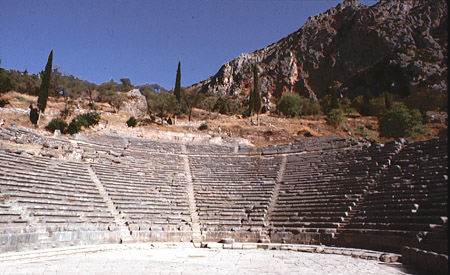
[As Pindar, declaiming in the theater at Delphi] "The fame of Pelops shines from afar in the races of the Olympic festivals, where there are contests for swiftness of foot, and the bold heights of toiling strength..."
Master Thespian: You really captured Pindar. I felt like I knew the man. Genius!
Edmund Kean: No. Acting!
Now, then... have you prepared the fencing scene from Hamlet?
Master Thespian: Yes! [grabs fencing foils] Here is your foil.
Edmund Kean: Thank you! Very well, then. You shall play the part of Hamlet. And I shall play the great...Edmund Kean! By the way, you were brilliant in You're a Good Man, Charlie Brown as Linus in crisis.
Master Thespian: Oh, thank you. And, may I add, you were a perfectly raging queen! Elizabeth II, of course.
Edmund Kean: [an octave lower] Of course! [an octave higher] Now!
[They begin to fence furiously. Edmund Kean staggers backwards as Master Thespian swings his foil near him]
Edmund Kean: [covering his chest with his hand] Oh, Master.. M-master, you've cut me.. look how the blood gushes from my very veins!
Master Thespian: Oh, please forgive me, it was an accident..
Edmund Kean: Don't be silly! [opens his jacket to reveal no cut] Acting!
Master Thespian: Oh, you fooled me!
Edmund Kean: Of course I fooled you! I am the greatest actor of all time! I am...Kean!

Master Thespian: [thrusts foil] En-garde!
[They begin fencing again. Suddenly, Master Thespian drops his foil and falls gracefully into Edmund Kean's arms]
Edmund Kean: Master? Are you hurt?
Master Thespian: Oh, Kean, I'm afraid we've played this acting thing too far. You've made worm's meat of me! Adieu.. adieu.. remember me. Look! [points] The face of death is near! And so.. I flail! [his legs kick before his body falls limp]
Edmund Kean: Master! [cries] I have killed my protege! How... how... how will you ever forgive me?
Master Thespian: [stands] Very good! I was merely acting!
Edmund Kean: So was I! I've fooled you again!
Master Thespian: No! It is I who fooled you! For I am dead... and merely acting alive!
Edmund Kean: Genius! Yet I've been dead, mort, cadaverous, extinct, deceased and defunct for over a hundred and fifty years! It is I who am the genius!
Master Thespian: Curses! I see I shall have to read The Life of an Actor by Pierce Egan, dedicated to what's-his-name, to learn the secret to acting alive while dead yet still alive but actually a ghost.

Edmund Kean: Ah, yes! Have I mentioned it? The classic tome dedicated to moi, a life on the boards scarce in original boards, no copy in the original printed and illustrated boards at auction since 1975, unrecorded by Tooley, whose copy was that issued in parts within wrappers.
Master Thespian: A pox on your house! I shall read it anyway, yet, bringing the method of the great acting coach from Brooklyn, Stan Islavsky, to bear, I shall only be pretending to read, for I am...Master Thespian!
Edmund Kean: Genius!
Master Tespian: No. Acting!
__________
Reviewers who were in attendance swoon at the mere recollection. Afterward, Meryl Streep, Sean Penn, and Robert De Niro announced their retirements; there was no point in continuing as long as the floodlights shone on the one who, having kicked Barrymore, Garrick, Gielgud, and Olivier to the curb, needs no name beyond that which captions his portrait in Theater's Grand Lobby: Master Thespian.
Master Thespian: [sitting st his desk, writing] Dear Diary: I am awaiting the arrival of my mentor and acting teacher, the great Baudelaire. Today's lesson is The Greatest Actor of All Time. Knowing Baudelaire, he will come over and try to fool me, as if there could possibly be another actor greater than I, Master Thespian. But today, it will be I who fools him. I hope. [A knock is heard at the door] Yes?
Voice at Door: [mimicks trumpet fanfare] Make way for Her Royal Highness, Elizabeth II!
Master Thespian: One moment! [jumps up] Thank God! The Queen to see me! [at the door] Enter Your Majesty!
Baudelaire: [enters, disguised as the Queen] Thank you! I am looking for the greatest actor of all time! The theatrical community of all London told me I might be able to find him... here!
Master Thespian: Yes, your Majesty! The man you speak of stands before you!
Baudelaire: Ah-ha! Then you must be the great... Edmund Kean!
Master Thespian: [insulted] Don't be silly! I'm Master Thespian. Kean is merely a legend, and a very dead one. at that.
 |
| Frontispiece to The Life of an Actor. |
Baudelaire: The dedicatee to Pierce Egan's The Life of an Actor, the Poetical Descriptions by T. Greenwood, Embellished with Twenty-Seven Characteristic Scenes, Etched by Theodore Lane, Enriched also With Several Original Designs on Wood, Executed by Mr. Thompson, London: Printed for C.S. Arnold, 1825, merely a legendary actor?
Master Thespian: Yes! And barely one at that. An actor, that is.
Baudelaire: Oh, really? Why don't you try saying that... [removes crown and robe] ...to his face!
Master Thespian: Oh! Something is rotten in the state of Denmark: the ghost of Edmund Kean portraying Baudelaire playing Elizabeth II! You fooled me!
Edmund Kean: Acting!
Master Thespian: Oh, please, forgive me..
Edmund Kean: No!
Master Thespian: Oh, please.. I beg you...[kneels]...on bended knee, from the very depths of my heart.
Edmund Kean: Oh, get up. I have already forgiven you, I was merely... acting!
Master Thespian: [fuming] Again?! You fooled me again!
Edmund Kean: Thank you! Now, then.. what is the Question du Jour?
Master Thespian: Oh, Edmund Kean... Benjamin Franklin said, "The art of acting consists of keeping people from coughing." I've been offered to play the most difficult part of my entire career. I am to portray a dry cleaner with a wet nurse to satisfy his lactation fetish, trapped in the body of a woman with a hunchback seeking a female-to-male sex-change operation, playing the part of a five-year-old spayed chihuahua with a club foot who thinks she's a two-year-old neutered Persian cat with a ruptured left anterior cruciate ligament! My question is: How can I keep the audience from coughing?
Edmund Kean: [intensely considering. Then] Dose them with opium!
Master Thespian: Genius!
Edmund Kean: Thank you! And the audience will be spared the pain of your performance, too!
Master Thespian: [insulted] Oh, really? Riposte! The great Katherine Hepburn said, "acting is the perfect idiot's profession" -
Edmund Kean: - And you are perfect!
Master Thespian: Thank you! Wait a minute -
Edmund Kean: - Too late! Timing is everything. You really DO need to read Pierce Egan's The Life of an Actor, Dedicated to moi, Edmund Kean, Esq., The Poetical Descriptions by T. Greenwood, Embellished with Twenty-Seven Characteristic Scenes, Etched by Theodore Lane, Enriched also With Several Original Designs on Wood, Executed by Mr. Thompson, London: Printed for C.S. Arnold, 1825, the story of Peregrine Proteus, an actor forged on the anvil of Egan's imagination, and detailing the challenges facing the intensely stage-struck youth; the vicissitudes of an actor's life, and the world of the theater and its environs in early 19th century England. A British journalist on the popular culture scene, Egan is best known for Boxiana (1812-1828), Life in London (1821) and Sporting Anecdotes (1824); he coined the term, "the sweet science" to describe boxing. His was the best sportswriting since Pindar's coverage of the wide world of ancient Greek games.
[As Pindar, declaiming in the theater at Delphi] "The fame of Pelops shines from afar in the races of the Olympic festivals, where there are contests for swiftness of foot, and the bold heights of toiling strength..."
Master Thespian: You really captured Pindar. I felt like I knew the man. Genius!
Edmund Kean: No. Acting!
Now, then... have you prepared the fencing scene from Hamlet?
Master Thespian: Yes! [grabs fencing foils] Here is your foil.
Edmund Kean: Thank you! Very well, then. You shall play the part of Hamlet. And I shall play the great...Edmund Kean! By the way, you were brilliant in You're a Good Man, Charlie Brown as Linus in crisis.
Master Thespian: Oh, thank you. And, may I add, you were a perfectly raging queen! Elizabeth II, of course.
Edmund Kean: [an octave lower] Of course! [an octave higher] Now!
[They begin to fence furiously. Edmund Kean staggers backwards as Master Thespian swings his foil near him]
Edmund Kean: [covering his chest with his hand] Oh, Master.. M-master, you've cut me.. look how the blood gushes from my very veins!
Master Thespian: Oh, please forgive me, it was an accident..
Edmund Kean: Don't be silly! [opens his jacket to reveal no cut] Acting!
Master Thespian: Oh, you fooled me!
Edmund Kean: Of course I fooled you! I am the greatest actor of all time! I am...Kean!
Master Thespian: [thrusts foil] En-garde!
[They begin fencing again. Suddenly, Master Thespian drops his foil and falls gracefully into Edmund Kean's arms]
Edmund Kean: Master? Are you hurt?
Master Thespian: Oh, Kean, I'm afraid we've played this acting thing too far. You've made worm's meat of me! Adieu.. adieu.. remember me. Look! [points] The face of death is near! And so.. I flail! [his legs kick before his body falls limp]
Edmund Kean: Master! [cries] I have killed my protege! How... how... how will you ever forgive me?
Master Thespian: [stands] Very good! I was merely acting!
Edmund Kean: So was I! I've fooled you again!
Master Thespian: No! It is I who fooled you! For I am dead... and merely acting alive!
Edmund Kean: Genius! Yet I've been dead, mort, cadaverous, extinct, deceased and defunct for over a hundred and fifty years! It is I who am the genius!
Master Thespian: Curses! I see I shall have to read The Life of an Actor by Pierce Egan, dedicated to what's-his-name, to learn the secret to acting alive while dead yet still alive but actually a ghost.
Edmund Kean: Ah, yes! Have I mentioned it? The classic tome dedicated to moi, a life on the boards scarce in original boards, no copy in the original printed and illustrated boards at auction since 1975, unrecorded by Tooley, whose copy was that issued in parts within wrappers.
Master Thespian: A pox on your house! I shall read it anyway, yet, bringing the method of the great acting coach from Brooklyn, Stan Islavsky, to bear, I shall only be pretending to read, for I am...Master Thespian!
Edmund Kean: Genius!
Master Tespian: No. Acting!
__________

EGAN, Pierce. The Life of an Actor. Dedicated to Edmund Kean, Esq. The Poetical Descriptions by T. Greenwood. Embellished with Twenty-Seven Characteristic Scenes, Etched by Theodore Lane. Enriched also With Several Original Designs on Wood, Executed by Mr. Thompson. London: Printed for C.S. Arnold, 1825.
First edition. Quarto (10 x 6 1/8 in; 254 x 160 mm). xvi, 272 pp (a-b4, B-C8, D-Z4, Aa-Kk4). Twenty-seven aquatints with original hand-coloring. Nine text woodcuts. Printed and illustrated boards.
Abbey, Life 414. Prideaux. p. 308. Cf. Tooley 195.
__________First edition. Quarto (10 x 6 1/8 in; 254 x 160 mm). xvi, 272 pp (a-b4, B-C8, D-Z4, Aa-Kk4). Twenty-seven aquatints with original hand-coloring. Nine text woodcuts. Printed and illustrated boards.
Abbey, Life 414. Prideaux. p. 308. Cf. Tooley 195.
This post freely adapted from a sketch transcript from the December 7, 1985 episode of Saturday Night Live.
__________
Book images courtesy of David Brass Rare Books, currently offering this copy, with our thanks. Image of Jon Lovitz courtesy of NBC.
__________
__________